

Common Indoor Molds · Sioux Center, IA
Common Indoor Molds in Sioux Center, IA Homes
Aspergillus, Penicillium, Cladosporium, Chaetomium, Alternaria and the one people call “black mold.” Siouxland Mold Solutions explains what each is, where it grows in northwest Iowa homes and why the answer to all of them is the same: find the water and remove the mold. Same-day response, calls answered 24/7.
You can’t identify mold by color, and you don’t need to. Still, knowing the names helps you read an inspection report and ignore the scare talk.
The Short Version
What Are the Most Common Molds Found Indoors?
The CDC names Cladosporium, Penicillium and Aspergillus as the most common indoor molds. Chaetomium, Alternaria and Stachybotrys (the one called “black mold”) turn up too, usually where materials have been wet for a while. All of them are fungi that float in as spores from outdoors and start growing the moment they land on something wet and organic.
There are thousands of species, and the genus names are shorthand. A lab report that says “Penicillium/Aspergillus-type” is grouping spores that look alike under a microscope. The CDC says you don’t need to identify the mold to clean it up, and the EPA says that when visible mold is present, sampling is usually unnecessary.
What the names are good for is context. Some are mostly outdoor molds that drift in, some thrive on wet drywall and wood, and a few are more of a concern for people with weakened immune systems. We’ve written a short guide to each below. If you want to know whether what you’re seeing is mold at all, start with the signs of mold on this site.
Quick answer: Can I tell which mold I have by its color?
No. The same species can look different at different stages, and different species can look alike. Color isn’t a reliable guide to type or to risk. Where it’s growing and how long it’s been wet tell you more.
The Six to Know
What Does Each Common Indoor Mold Look Like and Where Does It Grow?
Short profiles. Each has its own page with the detail, including how it’s handled in a northwest Iowa house.
Aspergillus
About 180 species; fewer than 40 cause infections in people, and A. fumigatus is the most common (CDC). Found indoors and out, in colors that range from green to yellow to black.
Penicillium
Green spore heads, often blue-green colonies. Grows on damp building materials and spreads readily by air. Related species give us penicillin and blue cheese.
Cladosporium
Olive-green to brown or black. One of the most common molds both indoors and outdoors, with spores that are often very abundant in outdoor air.
Chaetomium
A dark-walled mold found in soil and plant debris, and reported on water-damaged cellulose materials like paper-faced drywall.
Alternaria
A common allergen found worldwide, outdoors on plants and soil and indoors where it’s damp.
Stachybotrys (“Black Mold”)
Slow-growing, most often found on wet cellulose such as drywall paper, with constant moisture. An uncommon contaminant of indoor air.
White growth, and the word “mildew,” each get their own plain-English guide as well.
Side by Side
How Do Indoor Molds Compare?
A reference table, not an identification tool. Colors overlap and species vary.
| Mold | Often looks like | Usually found | What to know |
|---|---|---|---|
| Aspergillus | Varies; green, yellow, black or white colonies | Indoors and out; dust, damp materials | Infections are mostly a concern for people with weakened immunity or lung disease (CDC) |
| Penicillium | Blue-green to green, fuzzy | Water-damaged materials, dust | Spreads by air; the same genus gives us penicillin |
| Cladosporium | Olive-green, brown or black | Surfaces and outdoor air; window frames, damp surfaces | Airborne spores can trigger allergies and asthma symptoms |
| Chaetomium | Dark; starts lighter, darkens as it matures | Wet paper, drywall paper, wood | Often a sign of long-term water damage |
| Alternaria | Dark, velvety | Damp bathrooms, window frames, outdoor air | A common allergen |
| Stachybotrys | Greenish-black, slimy when wet | Constantly wet cellulose like drywall paper | Slow-growing; fewer other molds around it |
| White mold | White, powdery or cottony | Wood, basement walls, storage | A description, not a species; could also be efflorescence |
Descriptions drawn from the CDC and general mycology references. Treat appearance as a hint only.
Quick answer: Is one indoor mold safer than another?
Species differ in how likely they are to trigger allergies or cause infections in vulnerable people, but nobody should live with mold growing indoors. The same step applies to all of them: remove the moisture and clean or remove what’s affected.
Reading the Mix
What Does the Mix of Molds Say About How Wet a Building Has Been?
Some molds grow on materials that are only damp for a short time. Others show up after weeks of real wetness. Investigators use that pattern as a clue.
| Group | Examples | What it usually suggests |
|---|---|---|
| Fast starters | Penicillium, Aspergillus, Cladosporium | Materials that were damp or humid; they can start growing on less moisture and show up first |
| Water-damage molds | Chaetomium, Stachybotrys | Materials that stayed wet for longer; they are slower-growing and often appear later, on wet cellulose |
| Outdoor-dominant spores | Alternaria, Cladosporium, basidiospores, ascospores | What drifts in from outside; counts rise and fall with the season and the weather |
General mycology pattern; individual buildings vary. A lab report is one clue among several, not a verdict.
Quick answer: What does it mean if a report lists Stachybotrys or Chaetomium?
It suggests a material has been wet for a long time, often paper-faced drywall. It points to a water problem that needs finding and removal, not to a different cleanup method.
Reading a Lab Report
What Do Names Like “Penicillium/Aspergillus-Type” and “Basidiospores” Mean?
If you’ve had an air test, the report probably has names you’ve never seen. This is the plain-English version.
| Name on the report | What it is | What to keep in mind |
|---|---|---|
| Penicillium/Aspergillus-type | A group of spores that look alike under the microscope | The lab can’t tell them apart by spore alone; they’re common indoors and out |
| Cladosporium | A very common mold | Often among the most abundant spores in outdoor air |
| Basidiospores | Spores from mushrooms, puffballs and rusts | Mostly an outdoor group; high counts in fall are normal |
| Ascospores | Spores from a large group of fungi | Largely outdoor; can include some water-damage molds |
| Stachybotrys, Chaetomium | Water-damage molds | Presence suggests long-term wetness; absence doesn’t mean it’s fine |
Compare inside results with the outside sample taken at the same time. There are no federal limits for mold (EPA).
Why It Matters Less Than You Think
Does the Type of Mold Change How It Gets Removed?
Mostly no. That’s why we don’t push expensive species testing, and why you should be wary of anyone who does.
The Process Is the Same
Containment, HEPA vacuuming, removal of materials with growth, cleaning of what’s left and drying. We follow ANSI/IICRC S520 (4th edition, 2024) and the EPA’s guidance for any mold.
The Moisture Source Is the Same Problem
Every species on this page needs a damp surface. If the source stays, the next species just takes its place.
Who Might Want to Know the Species
A doctor treating an immune-compromised patient, an attorney, or a lab doing a clearance study. For everyone else, it’s curiosity.
What To Do Instead
Spend the money on finding and fixing the source and, if you want proof afterward, on independent clearance testing. See our mold inspection and testing guide for when that makes sense.
Local Angle
Which Indoor Molds Do Sioux Center Homeowners Run Into Most?
We don’t sample every job, so this is about patterns, not statistics. It’s what the weather, the farms and the houses here set up.
Outdoor Spores Come In
Cladosporium and Alternaria are among the molds whose spores are common in outdoor air. Open windows and farm-season dust bring them inside, and they settle on damp sills and bathrooms.
Basements and Block Walls
Penicillium- and Aspergillus-type growth on stored boxes, wood and drywall in basements that sweat in July or seep in spring.
Winter Condensation
Cold windows, exterior walls and attic sheathing collect moisture, and dark mold follows.
Long-Wet Materials
After the June 2024 flood, drywall, paneling and insulation that stayed wet are where we expect the heavier, longer-established growth.
HVAC Coils and Drain Pans
Damp, cool, dark surfaces in AC systems grow a mix of common molds. A musty smell when the AC starts is the clue.
Farm and Acreage Buildings
Stored grain and hay support molds that aren’t a house problem but can come into the house on clothes and boots. Farmhouses deserve a closer look.
Found something fuzzy, dark or musty? Call and we’ll tell you what to do first, whatever it’s called.
What To Do
What Should You Do When You Find Mold, Whatever the Type?
Five steps, in this order.
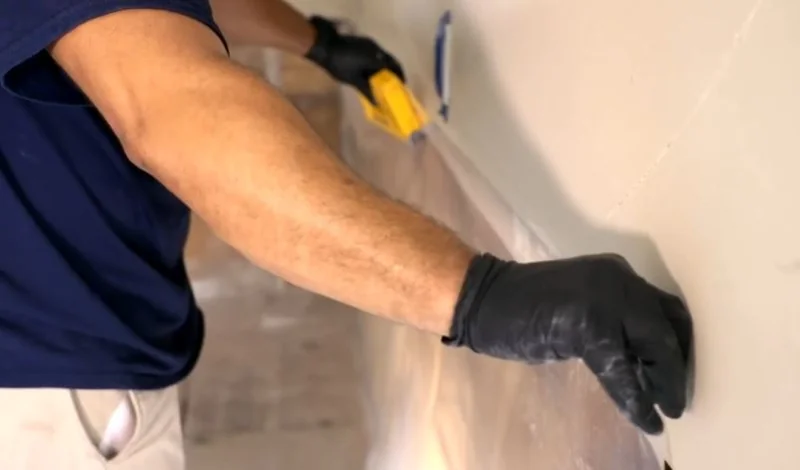
Don’t Disturb It
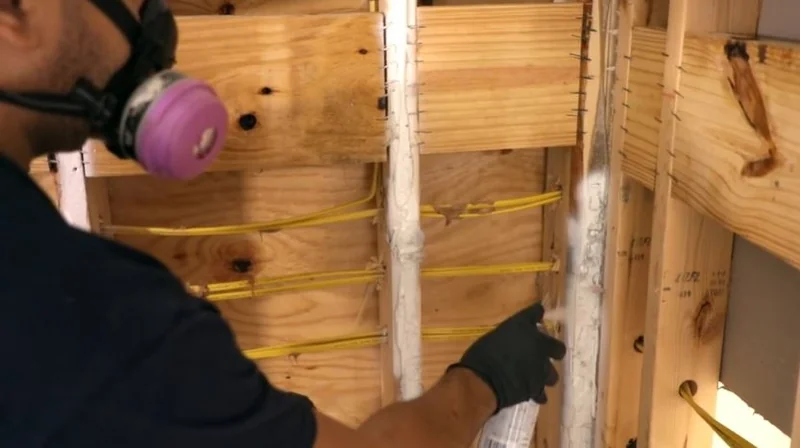
No dry scrubbing, sanding or fans pointed at it. Spores spread when mold is disturbed.
Why it matters: Disturbed mold travels.
Find the Water
Look for the leak, the condensation or the humidity. Moisture readings find hidden wet spots.
Why it matters: The water is the problem.
Decide DIY or Professional
Under about 10 square feet on a hard surface, you can often clean it. More than that, or in drywall, insulation, carpet or ductwork, call.
Why it matters: Size and material decide.
Remove or Clean, Then Dry
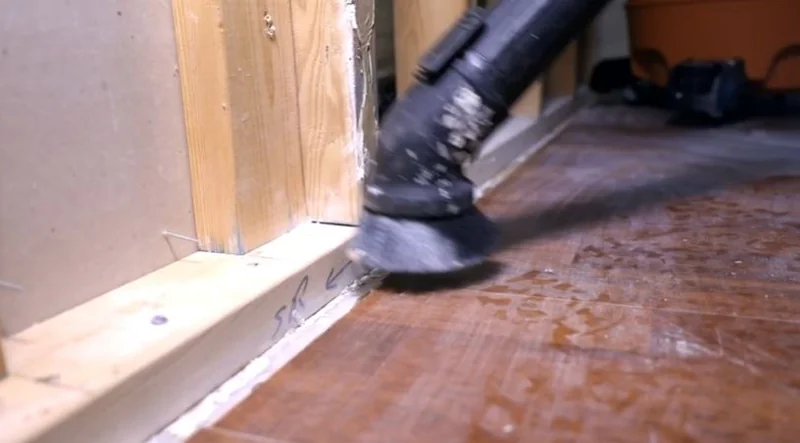
Porous materials with growth come out. Hard surfaces get detergent and water, then full drying.
Why it matters: Damp surfaces regrow mold.
Fix the Cause and Keep It Dry
Repair the leak, fix ventilation and keep humidity under 60%.
Why it matters: Prevention is the finish line.
FAQ
Common Indoor Molds: Frequently Asked Questions
Straight answers to the questions we get about names, colors and risk.
What is the most common mold in homes?
Cladosporium, Penicillium and Aspergillus, according to the CDC.
Is Aspergillus dangerous?
Most people who breathe Aspergillus spores don’t get sick. The CDC says infection mainly affects people with weakened immune systems or lung disease. See Aspergillus.
Which mold is the worst?
There isn’t one. How a mold affects you depends on you: allergies, asthma, immune status and how much you’re exposed to. The right response to indoor mold is the same for all of them.
Do I need to know what type of mold I have?
No. The CDC says you don’t need to identify it to clean it up, and the EPA says sampling is usually unnecessary when mold is visible.
Can household molds make you sick?
They can irritate the nose, throat, eyes and skin and trigger asthma or allergies in sensitive people, per the CDC and EPA. People with weakened immune systems or chronic lung disease can get infections.
Why does my lab report group molds together?
Many species look alike under the microscope, so labs report groups such as Penicillium/Aspergillus-type. That’s normal.
What’s the difference between mold and mildew?
Mildew is a term for flat, often white or gray growth, and also the name of two groups of plant diseases. Indoors the two words usually refer to the same kind of problem.
Do you handle mold identification outside Sioux Center?
Yes. Same-day response in Sioux Center (51250), Orange City (51041), Hull (51239), Rock Valley (51247), Sheldon (51201), Le Mars (51031) and the towns around them. Call anytime, 24/7, and we’ll tell you honestly when we can be there.
Will insurance cover it?
Often only when the damage came from a sudden, covered event like a burst pipe or storm damage. Long-term seepage, humidity and flooding are usually excluded, and sump or sewer backup needs a water-backup endorsement. We give you dated photos, moisture readings and a written scope for your adjuster either way.
Get Help Today
Found Mold? Call Us Today
Whatever it’s called, we find the water, remove the mold and verify the work. Same-day response in Sioux Center and nearby towns, with a written scope and price before work starts.
Siouxland Mold Solutions
- Office529 4th St NW, Sioux Center, IA 51250
- Phone(712) 569-1887
- EmailContact@moldremovalsiouxcenter.com
- HoursCall anytime, 24/7, including emergencies
- ResponseSame-day across Sioux Center and our service area