

Flood Mold Cleanup · Sioux Center, IA
Flood Mold Cleanup in Sioux Center, IA
Siouxland Mold Solutions handles flood mold cleanup from the first pump-out to the last moisture reading: water extraction, removal of everything floodwater ruined, cleaning and sanitizing, structural drying and mold remediation. River flooding, storm runoff and surface water are Category 3 water, and we treat them that way. Same-day response across Sioux, Lyon, Plymouth, O’Brien and Osceola counties.
Mold can start growing on wet drywall, carpet and wood within 24 to 48 hours (EPA). Calls are answered 24/7, so call before the clock runs out.
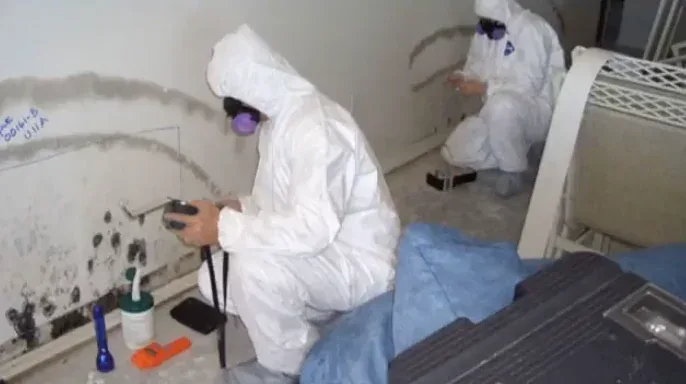
Flood Mold Cleanup
What Is Flood Mold Cleanup?
Flood mold cleanup is the combined job of water damage restoration and mold remediation after floodwater gets into a home: pumping and extracting the water, removing porous materials the flood touched, cleaning and sanitizing the structure, drying it to verified readings, and removing any mold that has already started.
The key word is flood. Water from a river, a storm or surface runoff is Category 3 under IICRC S500, the water damage standard, which means it’s assumed to carry sewage, bacteria, farm chemicals and whatever else it picked up on the way in. Carpet, pad, drywall and insulation that sat in it can’t be dried and kept. They come out.
If you wait too long, the job changes. Drying a flooded basement in the first two days is water damage restoration. Two weeks later, with mold across the lower walls and behind the baseboards, it’s mold remediation under ANSI/IICRC S520 as well. We do both, so you don’t have to hire twice.
Quick answer: Can I clean up after a flood myself?
You can do a lot of the early work safely: take photos, move belongings, pull out wet carpet and pad, and throw away soaked cardboard. But floodwater is contaminated, and mold starts in 24 to 48 hours. Anything larger than about 10 square feet of mold, wet wall cavities, or a furnace or water heater that sat in water needs professionals.
The First 48 Hours
What Should You Do in the First 48 Hours After a Flood?
The first two days decide whether this is a drying job or a mold job. Here’s the order to work in while we’re on the way.
1. Power and Gas First
Don’t walk into water near outlets, extension cords, the furnace or the electrical panel. If the panel got wet, leave the power off and have an electrician check it. If you smell gas, leave and call the gas company from outside.
2. Dress for Contaminated Water
Iowa’s disaster recovery guidance calls for an N95 or better respirator, rubber boots, waterproof gloves and goggles. Keep kids, pets, pregnant family members and anyone with a weakened immune system out.
3. Photos Before Anything Moves
Photograph the water line on the walls, damaged items, the furnace and water heater, and the outside of the house. Your adjuster will ask.
4. Pump Slowly
For a basement with deep water, Iowa State University Extension warns against pumping out more than about 2 feet at a time, because saturated soil can push the walls in once the water inside is gone.
5. Get Soaked Things Out
Carpet, pad, cardboard, mattresses and upholstered furniture that sat in floodwater won’t come back. Iowa’s guidance is simple: if in doubt, throw it out.
6. Test the Well
On acreages with private wells, ISU Extension advises testing the water after flooding before anyone drinks it. Use bottled water until the results come back.
Keep or Remove?
What Has to Be Removed After Floodwater Gets Into a House?
Floodwater is Category 3, so the rule is stricter than for a clean-water pipe leak. Porous materials it soaked come out; solid materials get cleaned, sanitized and dried.
| Material | What usually happens | Why |
|---|---|---|
| Carpet and pad | Remove and discard | Holds contaminated water and can’t be sanitized reliably |
| Drywall | Cut out above the water line, usually 1–2 ft higher | Wicks water upward; the paper backing feeds mold |
| Fiberglass insulation | Remove and discard | Holds water and contamination in the wall |
| Wood paneling and trim | Usually removed; solid trim sometimes saved | Mold grows on the back side |
| Studs, joists, sill plates | Clean, sanitize and dry; replace if soft | Solid wood can usually be saved |
| Concrete and block | Clean, sanitize and dry | Non-porous enough to clean |
| Furnace, water heater, water softener | Have a qualified technician inspect before using | Controls and burners that were submerged can be unsafe |
| Mattresses, upholstered furniture, stuffed toys | Usually discard | Can’t be cleaned after contaminated water |
| Hard plastic, metal, glass, dishes | Wash and disinfect | Non-porous items can be cleaned |
| Food that touched floodwater | Discard | Including canned goods with damaged or bulging cans |
Quick answer: Why can’t wet drywall just be dried after a flood?
Because floodwater carries sewage, bacteria and soil into the gypsum and paper, and drying doesn’t remove them. Drywall that sat in clean water for a short time can sometimes be dried in place. Drywall soaked by floodwater should be cut out above the water line.
Sorting a basement full of belongings? Here’s how to decide what can be saved: cleaning belongings after mold and water damage.
Local Flood History
How Did the June 2024 Flood Change Mold Risk Around Sioux Center?
Three days of extreme rain, June 20–22, 2024, sent the Rock, Floyd and Big Sioux rivers to record levels (NWS Sioux Falls), and basements across northwest Iowa filled with water (Messenger News). Some of that damage is still showing up as mold today.
- Rock Valley: the Rock River reached 27.7 ft against a 22.7 ft record, a levee breached, and about 500 homes were damaged (USGS). FEMA funding for buyouts of 104 properties was announced June 30, 2026.
- Rock Rapids: the Rock River crested above 28 ft, beating its 2014 record of 27 ft, after 11.52 inches of rain nearby.
- Hymans’ Pit, just south of Sioux Center: six homes took water to the top of their walkout basements (N’West Iowa Review).
- Alton, Sheldon and Hospers: Floyd River flooding, with Sheldon above its record crest.
- Hawarden and Akron: Big Sioux River flooding; the river hit 27.34 ft at Akron.
Basements that were rebuilt quickly in summer 2024 are the ones to watch. If the wall cavities weren’t fully dry when the new drywall went up, mold can grow behind it for months with nothing visible but a musty smell. A moisture check with meters and a thermal camera answers the question without tearing anything out. June 2024 flood mold guide.

Quick answer: My basement flooded in 2024 and was redone. Should I worry?
Only if you notice a musty smell, staining at the bottom of the new drywall, or bubbling paint. If you do, a moisture inspection is the cheap first step. It’s much less expensive to check behind one section of wall than to guess.
Our Process
How Do We Clean Up Flood Damage and Mold, Step by Step?
Eight steps from the first pump to the final moisture reading, following IICRC S500 for water and ANSI/IICRC S520 for mold.
Safety Check and Photos
We confirm power is off in wet areas, check for gas smells and structural concerns, and photograph everything, including the water line, before anything is moved.
Why it matters: Safety first, and a clean record for your insurer.
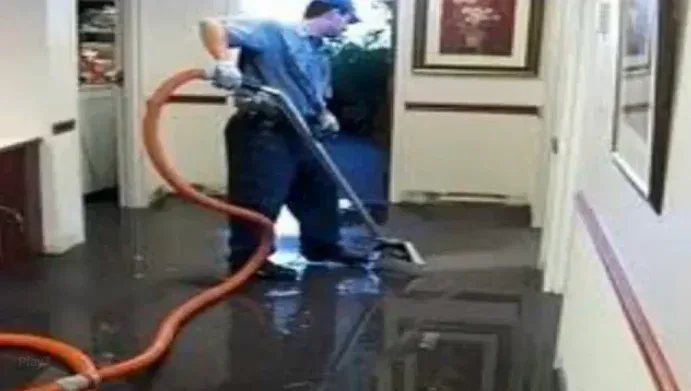
Extract the Water
Truck-mounted or portable pumps and extraction wands remove standing water. Deep basement water is lowered gradually, following ISU Extension’s 2-foot guidance.
Why it matters: Every gallon extracted is a gallon you don’t have to evaporate.
Written Scope and Price
Once we can see the damage, you get a written scope: what comes out, how it’s contained, how long drying takes and what it costs.
Why it matters: You know the full plan before the demolition starts.
Remove Flood-Damaged Materials
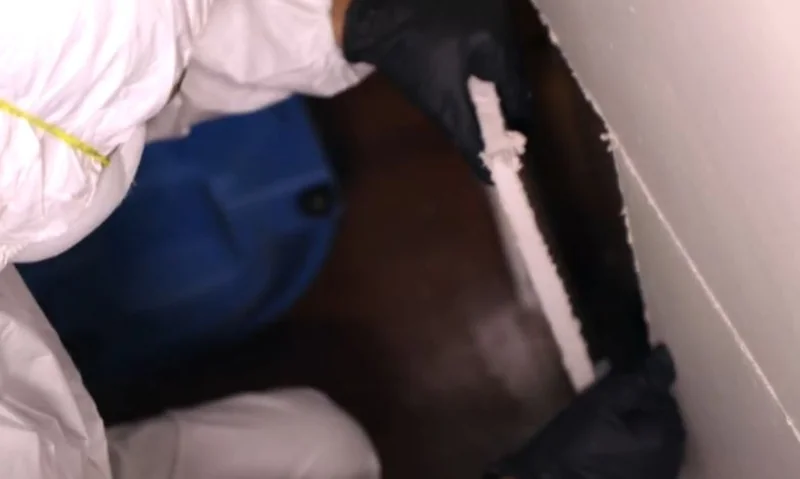
Carpet and pad, drywall above the water line, insulation, paneling and ruined contents are removed and hauled out. If mold has already started, the area is contained first.
Why it matters: Leaving contaminated material in the wall is how flood homes end up with mold a year later.
Clean and Sanitize
Framing, concrete and remaining surfaces are HEPA-vacuumed, washed and sanitized to remove silt, sewage residue and mold growth.
Why it matters: Floodwater leaves a film you can’t see. It has to be cleaned off before anything is closed up.
Dry to Verified Readings
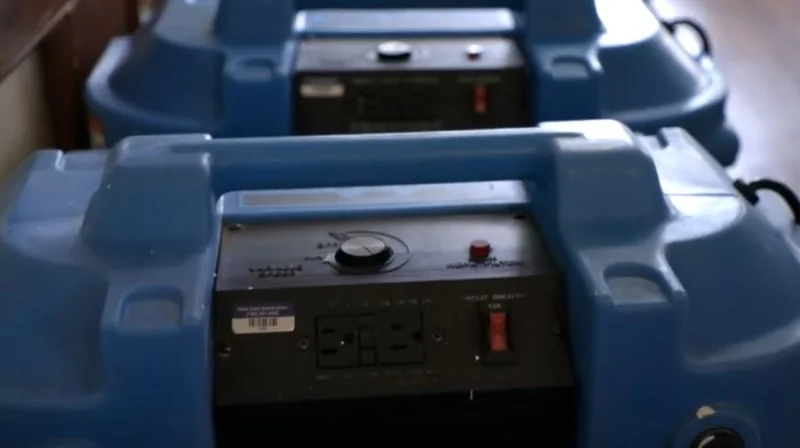
Commercial dehumidifiers and air movers run, and we log moisture readings daily until wood and concrete are close to unaffected materials in the same house.
Why it matters: Dry to the touch is not dry. Readings are the only proof.
Mold Remediation Where Needed
Any mold that started is removed under containment with HEPA air filtration, following ANSI/IICRC S520.
Why it matters: Caught early, this step is small. Caught late, it’s most of the job.
Verify, Document and Rebuild
Final readings and before-and-after photos, independent clearance testing if you want it, then drywall, flooring and finishes go back in.
Why it matters: You get a basement that’s dry, clean and documented, not just covered up.
For the full water side of the job, including burst pipes and appliance leaks: water damage restoration in Sioux Center.
Insurance
Does Insurance Cover Flood Damage and Mold in Iowa?
It depends on where the water came from and which coverage you bought. Here’s how it usually breaks down. This is general information, not insurance advice; your policy wording decides.
| Coverage | What it usually covers | Watch for |
|---|---|---|
| Standard homeowners policy | Usually excludes flood (surface water, overflowing rivers) | Covers sudden events like a burst pipe; check your mold limit |
| NFIP or private flood insurance | Covers flood damage to the building and, with contents coverage, belongings | New NFIP policies generally have a 30-day waiting period (FEMA) |
| Water backup endorsement | Covers water that backs up through drains or overflows a sump | An add-on to most homeowners policies; not the same as flood insurance |
| FEMA disaster assistance | Available only when a federal disaster is declared for your county | Not a replacement for insurance |
What We Give You for the Claim
- Dated photos of the water line and damage before removal
- Moisture readings logged every day of drying
- A written scope with quantities of what was removed
- A list of discarded contents, with photos
- Before-and-after photos when the job is finished
Mistakes That Hurt Claims
- Throwing things out before photographing them
- Waiting weeks to report the damage
- Letting mold grow while you wait for an adjuster
- Assuming a sewer backup is covered by flood insurance, or the other way around
Quick answer: Is sewer backup the same as flood?
No. Insurers treat them differently. Flood is surface water coming in from outside. Sewer backup is water coming up through your floor drain or plumbing, and it’s usually covered only with a water backup endorsement. Sewer backup, flood insurance and mold.
What Goes Wrong
Why Do Flooded Homes Get Mold Months Later?
Flooded homes get mold later when wet materials stay in the walls, when the structure is closed up before it’s dry, or when floodwater residue isn’t cleaned off the framing. The usual patterns:
- Drywall cut at the water line instead of above it, leaving wet gypsum that wicked higher
- Box fans and open windows used instead of dehumidifiers during a humid Iowa June
- New drywall hung before anyone measured the studs and sill plates
- Carpet dried and put back after floodwater
- Insulation left in the wall because it “looked dry” on the surface
What We Do Instead
We cut above the wicking line, run commercial dehumidifiers, and log readings until the structure matches dry materials elsewhere in your house. Nothing is closed up until the numbers say so, and you get the numbers.
Quick answer: How long does flood cleanup take?
Water extraction and tear-out usually take 1 to 2 days. Drying takes another 3 to 5 days in most basements, sometimes longer with block walls or very deep water. Rebuild starts only after readings confirm everything is dry.
Quick answer: Can I stay in my house after a basement flood?
Usually, yes, if the flooding was limited to the basement, the power and gas are safe, and the living area isn’t affected. The work area is kept separate. If sewage was involved, keep kids and vulnerable family members away from the basement until it’s cleaned.
Cost
How Much Does Flood Mold Cleanup Cost?
Floodwater is Category 3, so it costs more per square foot than a clean pipe leak. These are 2026 national figures; your price is written after we see the damage.
Category 3 Water
$7.50 / sq ftAngi’s 2026 average for black-water restoration. HomeGuide puts it at $9–$12 per sq ft.
Typical Water Job
~$3,868National average for water damage restoration, with most jobs between $1,383 and $6,369 (Angi, 2026).
Mold Remediation Added
$10–$25 / sq ftWhen mold has already started, remediation is priced by the affected area (2026 national range).
The cheapest flood cleanup is the one that starts in the first 48 hours. Call now.
Before the Next Flood
How Can You Prepare for the Next Flood in Northwest Iowa?
May and June are Sioux Center’s wettest months (about 4.2 and 4.5 inches, NOAA 1991–2020 normals). A little preparation in March pays off in June.
Know Your Flood Risk
If you live near the Rock, Floyd or Big Sioux rivers, look up your address on FEMA’s flood maps and ask your agent about flood coverage before spring.
Sump Battery Backup
Storms knock out power when sumps need it most. A battery backup keeps it running.
Backwater Valve on the Floor Drain
Stops sewer water from coming up the floor drain when city lines are overloaded during a big rain.
Store Up, Not Down
Plastic bins on shelves, not cardboard on the floor. Keep important papers and photos upstairs.
Move Water Away
Downspout extensions, clean gutters and soil that slopes away from the house handle everyday storms.
Photo Inventory
Walk through the basement with your phone once a year. It makes any future claim much easier.
Remember the Sioux Center rule: sump pumps discharge to the yard or storm system, never into the sanitary sewer. Tying a sump into the sewer overloads the system in storms, which is how neighbors’ floor drains back up. If your basement flooded from below and you’d like to reduce the damage next time, see flooded basement cleanup and basement mold removal.
FAQ
Flood Mold Cleanup: Frequently Asked Questions
Straight answers to what northwest Iowa homeowners ask after a flood.
How soon after a flood does mold grow?
Mold can start growing on wet drywall, carpet and wood within 24 to 48 hours, according to the EPA. That’s why extraction and drying in the first two days matter so much.
Can I save carpet after a flood?
Not after floodwater. River, storm and surface floodwater is Category 3, and carpet and pad that soaked in it should be removed and discarded.
How high do you cut drywall after a flood?
Usually 1 to 2 feet above the highest water line or wicking line, and in a straight line so the rebuild is clean. Moisture readings tell us exactly where the wet stops.
Is my furnace safe after a basement flood?
If floodwater reached the furnace, water heater or electrical controls, have a qualified technician inspect them before using them. Submerged controls can be unsafe.
Should I bleach everything after a flood?
Bleach isn’t a substitute for removal. The EPA doesn’t recommend biocides as a routine part of mold cleanup. Soaked porous materials need to come out, and solid surfaces need to be cleaned, then sanitized and dried.
How fast should I pump out a flooded basement?
Iowa State University Extension warns against pumping out more than about 2 feet of water at a time, because saturated soil outside can push the walls in once the water inside is gone.
Do I need to test my well after a flood?
If you’re on a private well and floodwater was near it, yes. ISU Extension advises testing before drinking. Use bottled water until you get results.
Does homeowners insurance cover flood mold?
Standard homeowners policies usually exclude flood. Flood damage is covered by NFIP or private flood insurance, and water that backs up through drains needs a water backup endorsement. Mold coverage is often limited even when the water is covered.
How long does flood mold cleanup take?
Usually 1 to 2 days for extraction and tear-out, plus 3 to 5 days of drying, before any rebuild. Homes with mold already growing take longer.
Do you clean up after flooding outside Sioux Center?
Yes. We serve 35 towns in Sioux, Lyon, Plymouth, O’Brien and Osceola counties, including Rock Valley, Rock Rapids, Hawarden, Alton, Sheldon, Akron and Le Mars, with same-day response.
After the Flood
Water in the House? Call Before the 48-Hour Mark
Tell us where the water came from, how deep it got and how long it’s been there. We’ll walk you through the next hour on the phone and get a crew headed your way the same day. Complete water damage restoration and mold remediation, one company, one written scope.
Siouxland Mold Solutions
- Office529 4th St NW, Sioux Center, IA 51250
- Phone(712) 569-1887
- EmailContact@moldremovalsiouxcenter.com
- HoursCall anytime, 24/7, including emergencies
- ResponseSame-day across Sioux Center and our service area