

Our Services · Sioux Center, Iowa
Mold Removal, Mold Remediation & Water Damage Restoration Services in Sioux Center, IA
Siouxland Mold Solutions handles the whole problem, not one piece of it: the water that got in, the mold it caused and the repairs after. We do complete mold removal, mold remediation and water damage restoration for homes, rentals, farmhouses and small businesses across Sioux, Lyon, Plymouth, O’Brien and Osceola counties.
Not sure which service you need? Tell us what you’re seeing and we’ll tell you, including when it’s something you can handle yourself.

What We Offer
What Services Does Siouxland Mold Solutions Offer?
We offer three core services: mold removal, mold remediation and water damage restoration. Around them we provide mold inspection and moisture mapping, sewage backup cleanup, flooded basement cleanup, and moisture fixes like dehumidifiers, crawl space vapor barriers and ventilation corrections that keep mold from coming back.
Every service starts the same way: finding the water. Mold is almost always a moisture problem first, whether it’s a sump that quit during a June storm, a block wall that seeps every March, “corn sweat” humidity in August or a bathroom fan venting into a frozen attic in January. Fix the mold without fixing the moisture and you pay for the same job twice.
Every job also gets the same protections: a written scope and price before work starts, containment and HEPA air filtration when mold is disturbed, drying checked with moisture readings, dated before-and-after photos, and honest advice when a spot is small enough to clean yourself.
Why It Matters
Why Hire One Company for Mold and Water Damage?
Water damage and mold are the same problem at two different points in time. When they’re handled by two different companies, things fall through the gap between them.
What Homeowners Here Run Into
- A water company dries the basement, closes the walls, and mold shows up behind the new drywall a few months later
- A mold company treats the stain but nobody traces the leak, so it’s back after the next wet spring
- The nearest restoration crews are in Sioux City, 40-plus miles away, so “same-day” becomes “this week”
- Two scopes, two invoices and two stories for your insurance adjuster
What We Do Instead
One team, one written scope and one set of moisture readings from the first visit to the final photo. The crew drying your basement is the same crew that checks it for mold before anything is closed up.
Quick answer: Should I call a mold company or a water damage company?
If there’s standing water or a fresh leak, the first job is water damage restoration: extraction and drying within 24 to 48 hours. If the water’s been there longer, or you can see or smell mold, it’s mold remediation. We do both, so you only have to make one call.
Core Services
Our Three Core Services in Sioux Center
Most jobs involve more than one of these. A flooded basement is water damage restoration today and mold remediation if it sits. We handle both under one written scope.
Mold Removal
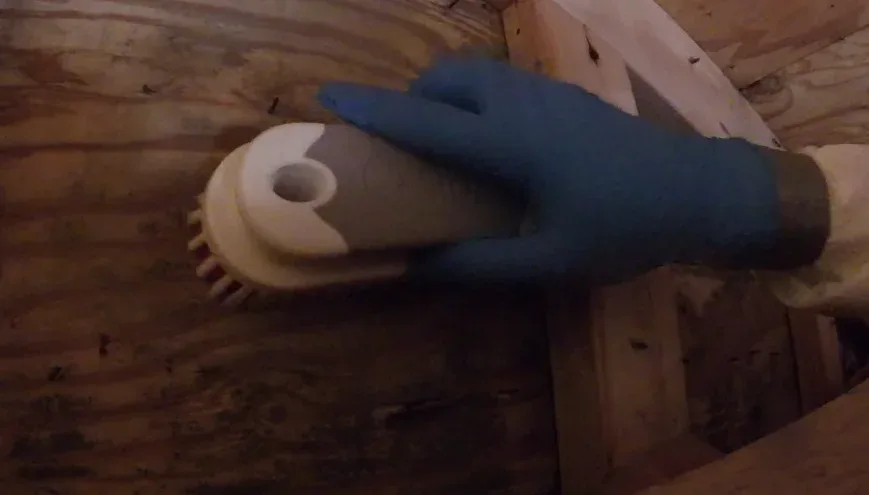
Mold removal means physically taking out moldy material: drywall, carpet pad, insulation, ceiling tile and anything porous that mold has grown into, plus HEPA-cleaning the wood and concrete that stays. It’s the hands-on part of the job, and it’s the part a spray-and-go company skips.
We cut out affected drywall (often the bottom 2 to 4 feet in a basement, higher if the water went higher), bag it inside the work area and carry it out, so nothing moldy is dragged through your house.
Best for: visible mold on walls, framing, sheathing or subfloor, and patches bigger than about 10 square feet
What’s included
- Moldy drywall, pad, insulation and ceiling tile removed and bagged
- HEPA vacuuming and damp wiping of framing and concrete
- Sanding, wire-brushing or blasting for heavily affected wood
- Dated before-and-after photos
Mold Remediation
Mold remediation is the complete job: containing the area so spores don’t spread, removing and cleaning, drying, verifying the work and correcting the moisture that caused it. It follows ANSI/IICRC S520, the industry standard of care for professional mold remediation (4th edition, 2024).
The difference matters. Removal without containment can spread spores to rooms that were clean. Removal without a moisture fix means the mold is back by next spring.
Best for: basement, attic and crawl space mold, recurring mold, mold after a leak or flood, and homes with someone who has asthma or allergies
What’s included
- Plastic containment with a zipper door
- HEPA air scrubbers under negative pressure
- HVAC shut off or sealed during the work
- Drying confirmed with moisture readings
- Independent clearance testing welcome
- Moisture source corrected before rebuild
Water Damage Restoration
Water damage restoration takes a wet house back to dry and whole: emergency water extraction, removal of materials that can’t be saved, structural drying with daily readings, cleaning and sanitizing after sewage or floodwater, and putting walls and floors back. It follows IICRC S500.
Speed is the whole game. Mold can start growing on wet drywall, carpet and wood within 24 to 48 hours (EPA), so we answer calls 24/7 and respond the same day. Water damage restoration in Sioux Center.
Best for: sump failures, burst or frozen pipes, storm and hail leaks, appliance leaks and sewer backups
What’s included
- Emergency water extraction
- Water category assessed (clean, gray or sewage)
- Wet drywall, insulation and pad removed as needed
- Dehumidifiers and air movers with readings logged
- Cleaning and sanitizing after Category 3 water
- Repairs once everything is dry, plus claim-ready documentation
Quick answer: What’s the difference between mold removal and mold remediation?
Mold removal is physically taking out moldy material. Mold remediation is the whole job: containment, removal, cleaning, drying, verification and fixing the moisture source. A good mold removal job is always part of a remediation plan.
Mold Removal by Area
Where Do We Remove Mold in Sioux County Homes?
Each part of a house gets mold for a different reason, so each one starts with different questions and ends with a different fix.
Basement Mold Removal
Most Sioux Center mold jobs start here. Spring seepage through block walls, sump failures, floor-drain backups and August humidity all end up in the basement. Basement mold removal.
Attic Mold Removal
Frost on nails, dark roof sheathing and stained rafters, usually from warm household air leaking into a cold attic or a bath fan venting into it. Attic mold removal.
Crawl Space Mold & Encapsulation
Bare-dirt crawl spaces in older homes and farmhouses let ground moisture condense on joists all summer. Cleaning plus a vapor barrier or full encapsulation. Crawl space mold removal.
Bathroom & Kitchen Mold
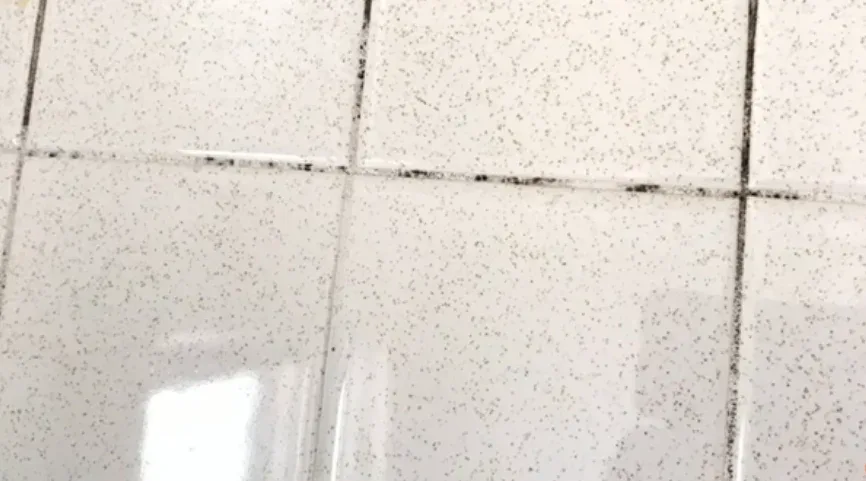
Spots on grout and caulk are usually a ventilation problem you can clean. Mold that keeps coming back behind tile, under a sink or behind a dishwasher usually means a hidden leak.
HVAC & Air Duct Mold
A musty smell when the AC starts often points to a clogged condensate drain, a wet drain pan or a dirty coil. We find the source before recommending any duct cleaning.
Mold Behind Drywall
Stains that come back after painting, bubbling paint and a smell stronger along one wall. Moisture mapping shows how far it goes before anything is opened.
Black Mold Removal
Stachybotrys, usually called black mold, grows on materials that stayed wet for a long time. The CDC says a mold’s color doesn’t tell you how harmful it is. It comes out the same way as any other mold.
Whole-House Mold Remediation
For homes with growth in several areas after a flood, a long-running leak or a vacant winter. Phased containment so the parts of the house you’re using stay clean.
Contents Cleaning After Mold
Hard, non-porous items can usually be cleaned. Porous items like mattresses, cardboard and upholstered furniture that were soaked by contaminated water usually can’t. We’ll help you sort which is which.
Water Damage Restoration
What Water Damage Restoration Services Do We Provide?
Sioux Center gets about 29.9 inches of precipitation and 34.8 inches of snow in a typical year (NOAA), and most of our water calls trace back to one of these six problems.
Flooded Basement Cleanup
Sump failures, spring seepage and storm water on the basement floor. Extraction first, then removal of what can’t be dried and structural drying. For deep water, Iowa State University Extension warns against pumping more than about 2 feet at a time.
Burst & Frozen Pipe Damage
With January lows around 9°F and a record of −37°F, frozen pipe breaks are a Sioux Center winter reality. Shut the main valve, then call. Clean supply water can often be dried in place if we get there fast.
Storm & Hail Water Damage
The June 29–30 and September 1, 2026 storms brought hail and high winds to Sioux County (NWS Sioux Falls). Damaged roofs, siding and windows can leak slowly for months before a ceiling stain shows.
Sewage Backup Cleanup
Water that comes up through a floor drain during a heavy storm is Category 3. Everything porous it touched comes out, and the area is cleaned and sanitized before rebuilding.
Appliance & Plumbing Leaks
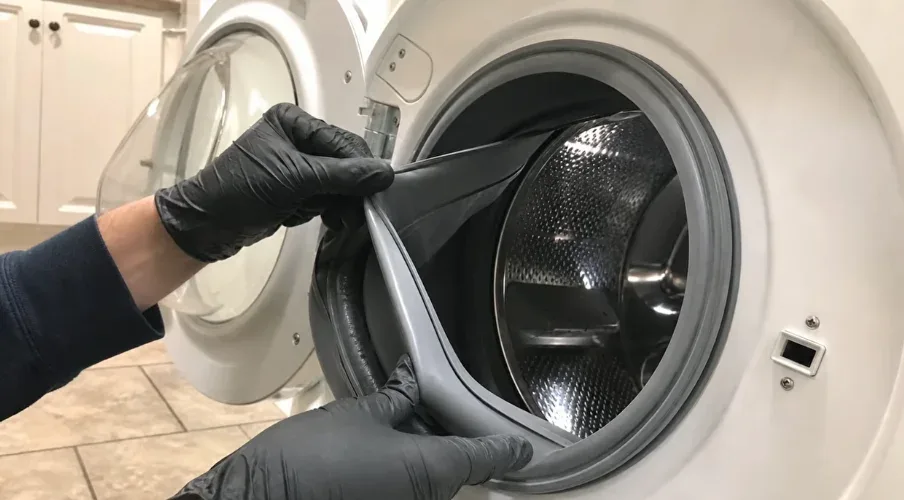
Washer and dishwasher overflows, water heater failures and slow supply-line leaks under sinks. We dry what can be dried and check the cabinet base and subfloor for hidden damage.
Mold After Flooding
Basements rebuilt quickly after the June 2024 flood can hold wet wall cavities behind new drywall. Moisture mapping answers the question without tearing anything out.
Quick answer: What should I do first if my basement is flooding?
Stay out of water near outlets, the furnace or the electrical panel. Stop the source if you can do it safely: shut the main valve for a burst pipe, or check that the sump has power. Take photos before you move anything, treat sewer water as contaminated, and call us. We answer 24/7.
Local Conditions
When Do Sioux Center Homes Need These Services?
Mold and water problems here follow the calendar. This is when we get called for what, based on northwest Iowa’s weather (NOAA 1991–2020 normals).
| Season | What’s happening | Services we’re called for most |
|---|---|---|
| March–April | Snowmelt (about 34.8 in of snow a year), saturated ground, block walls seeping | Flooded basement cleanup, sump failure water damage, basement mold |
| May–June | Wettest months (about 4.2 in in May and 4.5 in in June), storms, power outages | Water damage restoration, sewage backup cleanup, storm leaks |
| July–August | Corn sweat humidity with dew points in the 70s | Musty basement inspections, dehumidifiers, crawl space mold |
| September–November | Fall storms and hail, homes closing up for winter | Hidden leak and mold inspections, roof-leak water damage |
| December–February | Average January lows near 9°F, record −37°F | Burst and frozen pipes, attic frost mold, ice dam leaks |
The June 20–22, 2024 flood sent the Rock, Floyd and Big Sioux rivers to record levels (NWS Sioux Falls). Homes rebuilt quickly afterward can still hold moisture behind new drywall, so we check for it year-round.
Inspection & Testing
Mold Inspection and Moisture Mapping
Not every musty smell needs a remediation crew. An inspection uses pin and pinless moisture meters, a hygrometer and a thermal imaging camera to find wet areas behind walls and under floors without tearing anything out, then traces them to the source.
- Visual inspection of the affected areas and likely sources
- Moisture readings and thermal images you can keep
- A plain answer: DIY, monitor it, or professional remediation
- Honest advice on when lab testing is worth paying for
The CDC doesn’t recommend routine testing to identify mold species, because every type of indoor mold should be removed either way. Testing helps when you smell mold but can’t find it, for real estate deals, or to confirm a job is finished. Mold inspection and testing in Sioux Center.
Prevention
Moisture Fixes That Keep Mold From Coming Back
Remediation fails when the water source stays. Depending on what we find, the fix may be one of these:
- Basement dehumidifier sized for the space, to keep humidity under 60% (EPA)
- Crawl space vapor barrier or full encapsulation
- Bathroom and kitchen fans rerouted to vent outdoors, not into the attic
- Sump battery backup for storm power outages
- Gutters, downspout extensions and grading that move water away from the foundation
- Sump discharge to the yard or storm system, never the sanitary sewer (City of Sioux Center rule)
If part of the fix needs a plumber, roofer or waterproofing contractor, we’ll tell you plainly.
Which Service Do You Need?
Which Service Do You Need? Start With What You’re Seeing
Match what you’re noticing to the service that usually fixes it, and how soon to act.
| What you notice | Service that usually fixes it | How soon to act |
|---|---|---|
| Water on the basement floor or coming up the floor drain | Water damage restoration; sewage cleanup if it came from the drain | Today |
| Musty smell in the basement, no visible mold | Inspection and moisture mapping | This week |
| Dark spots on drywall that come back after cleaning | Mold remediation with drywall removal | This week |
| Ceiling stain after a storm, hail or thaw | Water damage restoration plus leak repair | This week |
| Frost or dark staining on attic nails and sheathing | Attic mold remediation plus ventilation fix | Before the next thaw |
| Musty smell when the AC starts | HVAC mold inspection and cleaning | This week |
| Small spots on grout or caulk under 10 sq ft | DIY cleaning; we’ll tell you how | When convenient |
| White crystals on concrete walls | Usually efflorescence, not mold; drainage fix | Plan it |
Our Standards
What Comes With Every Service We Provide?
Iowa doesn’t license mold remediation, so these are the rules we hold ourselves to on every job, large or small.
Moisture Source Found
Meters and thermal imaging on every job, so we fix the cause and not just the stain.
Written Scope First
What comes out, how it’s contained, how long it takes and what it costs, in writing before work starts.
Containment When Needed
Plastic containment and HEPA air scrubbers under negative pressure whenever mold is disturbed.
Dry Before Closed
Readings checked against unaffected materials before any wall or floor goes back in.
Proof You Can Keep
Dated before-and-after photos and readings for your insurer, a buyer or your landlord.
Honest About Small Jobs
Under about 10 square feet on a hard surface is often DIY (EPA). We’ll say so.
What We Won’t Sell You
- Fogging, ozone or “treatment-only” jobs that leave moldy material in the wall
- Paint or primer over mold to hide a stain
- A crew for a patch you can safely clean yourself
- Clearance testing of our own work as the only proof it’s done
- “Toxic black mold” scare talk or pressure to sign the same day
Quick answer: How much do your services cost?
Most professional mold remediation jobs cost $1,200 to $3,750 based on 2026 national averages, and water damage restoration averages about $3,868 nationally (Angi, 2026). The biggest factors are how much material has to come out and what kind of water was involved. You get a written price after we see it. Mold remediation cost in Sioux Center.
Who & Where
Who Do We Provide These Services For?
The same services, adjusted for the building and the people in it.
Homeowners and Families
Sioux Center is a young town with a median age around 30, and close to 4 in 10 households have kids. We keep work areas sealed off and explain what we find calmly.
Landlords and Renters
Iowa Code 562A.15 requires landlords to keep rentals fit and in repair. Documented, fast work for rentals near Dordt University and across town.
Buyers, Sellers and Agents
Iowa Code 558A requires sellers to disclose known problems. A written scope and photos both sides can read, scheduled around closing.
Farmhouses and Acreages
Stone foundations, bare-dirt crawl spaces and wells that ISU Extension advises testing after flooding. We serve rural routes between towns.
Churches, Daycares and Businesses
Work scheduled around services, class time and business hours, with containment that keeps the rest of the building open.
36 Towns, 5 Counties
Sioux Center, Orange City, Hull, Rock Valley, Hawarden, Sheldon, Le Mars, Rock Rapids, Sibley and the towns between them, with same-day response.
FAQ
Mold and Water Damage Services: Frequently Asked Questions
Quick answers about what we do and how we do it.
Do you do both mold remediation and water damage restoration?
Yes. We do complete mold removal, mold remediation and water damage restoration, so a flooded basement or a leak can be dried, cleaned, checked for mold and repaired under one written scope.
Do you offer emergency water damage service?
Yes. Calls are answered 24/7, including nights, weekends and holidays, and we offer same-day response across our service area. Call (712) 569-1887.
Do you remove black mold?
Yes. Black mold (Stachybotrys) is removed the same way as other indoor mold: containment, removal of damaged materials, HEPA cleaning, drying and a moisture fix. The CDC says a mold’s color doesn’t tell you how harmful it is.
Do you spray or fog for mold?
Not as a fix. The EPA doesn’t recommend biocides as a routine part of mold cleanup, and fogging doesn’t remove growth from inside drywall or insulation. We physically remove damaged materials and HEPA-clean what stays.
Do you test for mold?
We inspect and map moisture on every job. If you want lab testing or clearance testing, we’ll tell you when it’s worth it and recommend an independent tester, so the company doing the work isn’t grading its own job.
Can I clean some mold myself?
Yes, if the area is smaller than about 10 square feet on a hard surface and the water problem is fixed (EPA). Scrub with detergent and water, dry it completely, and wear an N95 mask, gloves and goggles.
Do you fix the cause of the moisture?
Yes. Dehumidifiers, vapor barriers, fan venting, sump backups and similar fixes are part of the job. If part of the fix needs a plumber, roofer or waterproofing contractor, we’ll tell you plainly.
Do you work with insurance?
We give you dated photos, moisture readings and a written scope for your adjuster. We can’t promise what your insurer will pay; most Iowa policies cover mold only when it came from a sudden event like a burst pipe.
Do you serve businesses and rentals?
Yes. Churches, daycares, offices, shops and rental properties, with work scheduled around your hours and tenants.
Get Started
Tell Us What You’re Seeing, and We’ll Tell You What You Need
Call and describe the problem. We’ll tell you which service fits, whether it needs a visit, what’s likely causing it and what it usually costs. If it’s water, we’ll tell you what to do right now while we’re on the way.
Siouxland Mold Solutions
- Office529 4th St NW, Sioux Center, IA 51250
- Phone(712) 569-1887
- EmailContact@moldremovalsiouxcenter.com
- HoursCall anytime, 24/7, including emergencies
- ResponseSame-day across Sioux Center and our service area