

Basement Mold Removal · Sioux Center, IA
Basement Mold Removal in Sioux Center, IA
Siouxland Mold Solutions removes basement mold the right way: we find the water that caused it, contain the area, remove moldy drywall, carpet pad and insulation, HEPA-clean what stays, dry everything to verified readings and fix the moisture source so it doesn’t come back next spring. Same-day response in Sioux Center and 35 nearby towns.
Seepage after snowmelt, a sump that quit in a June storm, or a musty smell every August: tell us what you’re seeing and we’ll tell you what it takes.
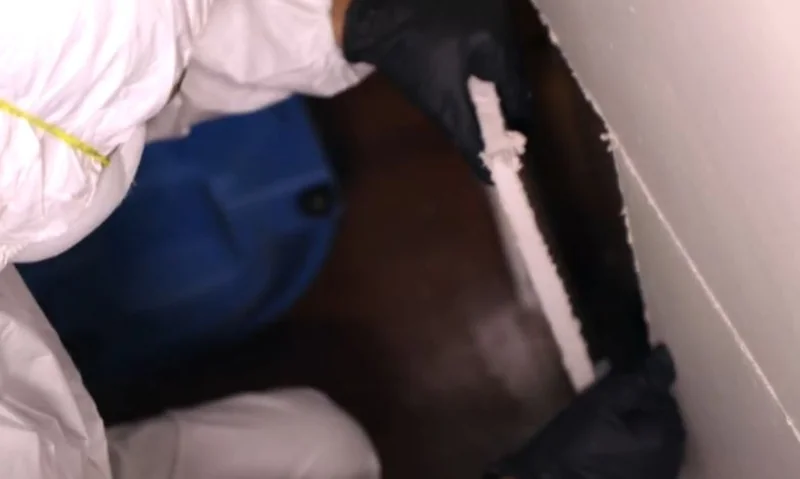
Basement Mold Removal
What Does Basement Mold Removal Involve?
Professional basement mold removal means sealing off the affected area, physically removing moldy materials that can’t be cleaned (drywall, carpet pad, fiberglass insulation), HEPA-vacuuming and scrubbing the framing and concrete that stay, drying the space to verified moisture readings and correcting whatever let the water in. Spraying a product on the surface and leaving is not mold removal.
Basements are where most mold problems in Sioux Center start. Nationally, basements and crawl spaces account for about 22% of mold removal jobs (Angi), but in a place with 34.8 inches of snow a year, wet Mays and Junes and block-wall foundations, the basement is the first place to look.
The job follows ANSI/IICRC S520, the industry standard for professional mold remediation (4th edition, 2024), and IICRC S500 when the mold came from a water event like a flood or sump failure. Those standards are why we contain before we cut, and why we don’t close a wall until the readings say it’s dry.
Quick answer: Can I just bleach the mold in my basement?
Not on drywall, wood or carpet. The EPA doesn’t recommend bleach or other biocides as a routine part of mold cleanup, and bleach doesn’t reach growth inside porous materials. On a small spot of hard, non-porous surface under about 10 square feet, detergent and water work. Anything bigger or porous needs removal.
Warning Signs
What Are the Signs of Mold in a Basement?
Most basement mold is hidden: behind finished walls, under carpet or on the back side of paneling. These are the signs that usually show up first.
A Musty, Earthy Smell
The most common first sign. If it’s stronger near one wall, under the stairs or when the carpet is damp, there’s usually moisture behind it.
Spots Along the Bottom of Drywall
Black, gray or green spots in the bottom 1 to 2 feet of finished walls, often behind furniture or inside closets, where water wicked up from the floor.
Damp Carpet or Stained Pad
Carpet that feels cool and damp, smells after rain, or has dark staining on the pad underneath when you pull back a corner.
Water Lines and Staining
A tide line on drywall or paneling, rust on the bottom of metal shelving, or stains on the floor near the sump or floor drain.
Bubbling or Peeling Paint
Paint that blisters on block walls or drywall means water is pushing through from behind.
White Deposits on Concrete
White, crystal-like crust on block or poured walls is usually efflorescence, mineral salts left by water. It isn’t mold, but it tells you water is coming through the wall.
Quick answer: Is white fuzz on my basement wall mold or efflorescence?
Rub it between your fingers. Efflorescence is gritty and crumbles into powder, dissolves in water and only grows on concrete, block or brick. Mold is soft or fuzzy, can grow on wood, drywall and fabric, and usually smells musty. If it’s on wood or drywall, treat it as mold.
Local Causes
Why Do Sioux Center Basements Get Mold?
Mold needs three things: moisture, food (drywall paper, wood, carpet, dust) and time. Every basement has the food. Northwest Iowa’s weather supplies the moisture, one season at a time.
Spring Snowmelt
Sioux Center averages about 34.8 inches of snow a year (NOAA 1991–2020). When it melts onto frozen or saturated ground in March and April, the water finds block-wall joints, cracks and window wells.
May and June Rain
May (about 4.2 in) and June (about 4.5 in) are the wettest months. Heavy storms overload sump pits and can push water up through floor drains when storm-stressed sewers back up.
Sump Failures and Power Outages
The June 29–30 and September 1, 2026 storms brought high winds to Sioux County (NWS Sioux Falls). Storms that knock out power stop sump pumps right when they’re needed most.
Corn-Sweat Humidity
In July and August, Iowa’s corn fields push dew points into the 70s. That humid air condenses on cool basement walls, floors and ducts, and mold grows with no leak at all.
Older Block Foundations
About 13% of Sioux Center homes were built before 1950 and the median home dates to 1979. Older block and clay-tile foundations often seep every spring, and many were finished long after they were built.
The June 2024 Flood
Record flooding on the Rock, Floyd and Big Sioux rivers. Six homes at Hymans’ Pit just south of Sioux Center took water to the top of their walkout basements (N’West Iowa Review). Quick rebuilds can trap moisture behind new drywall.
| Season | What happens in Sioux Center basements | What to do |
|---|---|---|
| March–April | Snowmelt, saturated ground, block walls seeping | Test the sump before the thaw; clear window wells; extend downspouts |
| May–June | Wettest months, storms, power outages, sewer backups | Battery backup on the sump; watch the floor drain after big storms |
| July–August | Corn-sweat humidity, dew points in the 70s | Run a dehumidifier; keep humidity under 60% |
| September–November | Fall storms; musty smells after the humid summer | Check behind furniture and under carpet; look for hidden leaks |
| December–February | January lows near 9°F, record −37°F | Protect pipes on outside walls; watch for condensation on cold walls |
Humid-season basement problems are common enough here that they have a local name. How corn sweat causes basement mold.
What Goes Wrong
Why Does Basement Mold Keep Coming Back?
Basement mold comes back when the moisture source wasn’t fixed, when moldy material was left inside the wall, or when a wet basement was closed back up before it was dry. These are the usual patterns:
- The spots were bleached or painted over, and the growth inside the drywall kept going
- A company dried the floor but never checked the wall cavities, and mold showed up behind the new drywall months later
- The sump pump was replaced but nothing was done about the downspout dumping water two feet from the foundation
- Carpet was cleaned in place after sewer water came up the floor drain
- Nobody ran a dehumidifier, and August humidity grew mold on the new framing
What We Do Instead
Every basement job starts with a moisture map and ends with readings. We cut drywall above the wet line, not at it. We remove carpet pad after any water event and carpet after any sewage. And we tell you what has to change outside the house (downspouts, grading, the sump discharge) so you’re not calling us again next year.
Quick answer: How long does basement mold removal take?
Most basement jobs take 1 to 3 days of removal and cleaning. If the basement was recently wet, drying adds another 3 to 5 days with dehumidifiers and air movers. Rebuilding (new drywall, paint, flooring) comes after the space is confirmed dry.
Quick answer: Is it safe to stay home during basement mold removal?
Usually, yes. The work area is sealed with plastic and kept under negative pressure with HEPA air scrubbers so dust doesn’t travel upstairs, and we shut off or seal the HVAC near the work. People with asthma or weakened immune systems may want to be out during removal days.
DIY or Professional?
When Can You Clean Basement Mold Yourself, and When Do You Need a Pro?
We’ll tell you honestly if a spot is something you can handle. Here’s where the line usually falls.
| What you’re seeing | Our advice | Why |
|---|---|---|
| A few spots on a painted block wall or concrete floor, under 10 sq ft | DIY: detergent, water, a scrub brush, then dry it | EPA 10 sq ft guideline |
| Musty smell, no visible mold | Inspection and moisture mapping first | Finds hidden water before anything is opened |
| Spots on finished drywall that come back after cleaning | Professional removal: the growth is inside the wall | Drywall is porous and can’t be cleaned |
| Mold on carpet or pad | Remove the pad; usually the carpet too | Porous materials hold growth and odor |
| Any water from a floor drain or sewer backup | Professional cleanup: it’s Category 3 water | IICRC S500 water categories |
| Mold larger than 10 sq ft, or in the HVAC | Professional remediation with containment | EPA and IICRC S520 |
| Someone in the home has asthma or a weakened immune system | Professional, with containment | Limits their exposure during cleanup |
If you clean it yourself: wear an N95 mask, gloves and goggles, scrub with detergent and water, dry the area completely within 24 to 48 hours, and don’t mix cleaners. If it comes back, the moisture problem isn’t fixed. Source: EPA, A Brief Guide to Mold, Moisture and Your Home.
Our Process
How Do We Remove Mold From a Basement, Step by Step?
The same eight steps on every basement job, whether it’s one wall behind the couch or a whole finished basement after a sump failure.

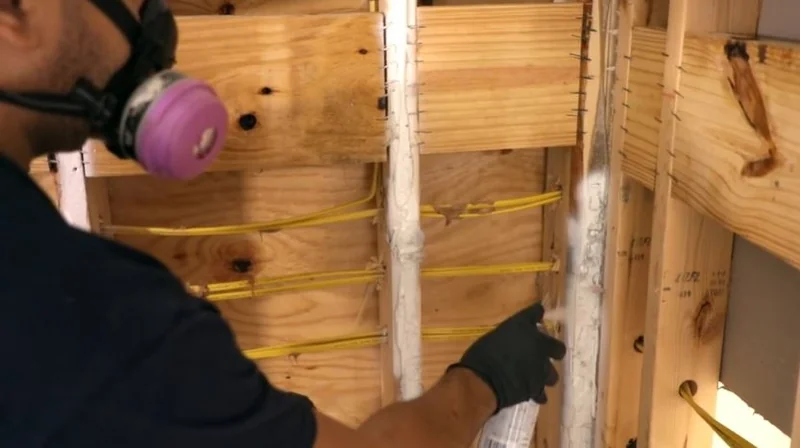
Find the Water
We check the walls, floor and framing with pin and pinless moisture meters and a thermal imaging camera, and trace the moisture to its source: seepage, the sump, a floor drain, a plumbing leak or condensation.
Why it matters: If the source isn’t found, the mold comes back. This step decides everything else.
Written Scope and Price
You get a written scope before any work: what comes out, how the area will be contained, how long it takes, what it costs and what moisture fix we recommend.
Why it matters: You know the full picture, including the moisture fix, before you spend a dollar.
Contain the Area
We seal the work area with plastic sheeting and a zipper door, cover the stairway, and set up HEPA air scrubbers to keep the area under negative pressure. The furnace return near the work is shut off or sealed.
Why it matters: Cutting moldy drywall releases spores. Containment keeps them out of the rest of your house.
Remove What Can’t Be Saved
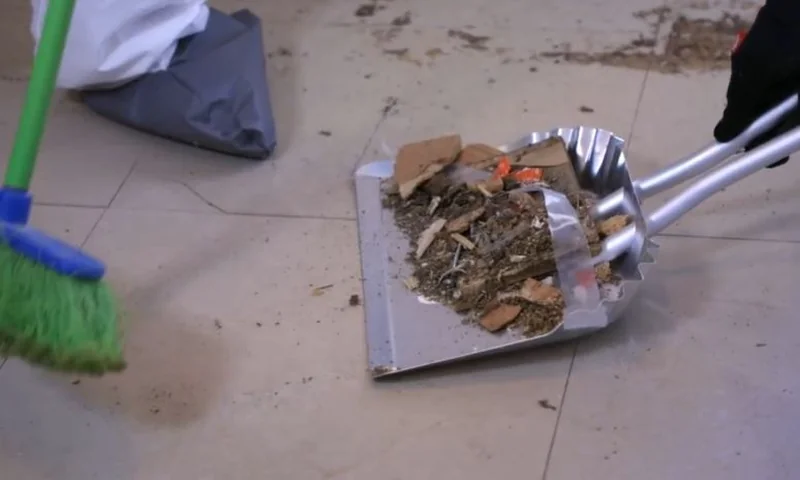
Moldy drywall is cut out, usually at least 1 to 2 feet above the highest visible growth or water line. Wet or moldy carpet pad, fiberglass insulation, ceiling tile and cardboard storage are bagged inside the containment and carried out.
Why it matters: Porous materials can’t be cleaned. Leaving them in the wall is why painted-over mold returns.
HEPA-Clean Framing and Concrete
Studs, joists, sill plates and concrete are HEPA-vacuumed, scrubbed and damp-wiped. Heavily stained wood is wire-brushed or sanded. Any antimicrobial or sealant comes after cleaning, never instead of it.
Why it matters: Solid wood and concrete usually stay. They just have to be truly clean.
Dry to Verified Readings
Dehumidifiers and air movers run until framing and concrete read close to unaffected materials in the same house. We log readings daily.
Why it matters: Closing a wall on wet framing is how mold ends up behind brand-new drywall.
Fix the Moisture Source
Sump battery backup, a properly sized dehumidifier, downspout extensions, floor-drain backflow protection, or a referral to a waterproofing contractor if the wall itself needs work. We’ll tell you plainly which ones matter for your house.
Why it matters: This is the step that decides whether you ever call a mold company again.
Verify, Then Rebuild
A final visual check and moisture readings, with dated before-and-after photos. Independent clearance testing is welcome if you want lab confirmation. Then drywall, paint and flooring go back in.
Why it matters: You get proof the job is done, not just our word for it.
Want the full detail on containment, air filtration and verification? Our mold remediation process.
Remove or Clean?
What Gets Removed and What Can Be Cleaned in a Moldy Basement?
The rule is simple: porous materials that are moldy or were soaked come out, and solid materials get cleaned. Here’s how that plays out in a typical Sioux Center basement.
| Material | What usually happens | Why |
|---|---|---|
| Drywall | Removed if moldy or wet more than 48 hours | Porous; growth gets into the paper and gypsum |
| Carpet pad | Removed after any water event | Holds water and odor; cheap to replace |
| Carpet | Removed after sewage or floodwater; sometimes saved after clean water | Category 3 water contaminates it |
| Fiberglass insulation | Removed if wet or moldy | Traps spores and stays damp |
| Rigid foam board on walls | Often cleaned and kept if intact | Mold grows on the surface, not inside |
| Studs, joists, sill plates | HEPA-cleaned, sanded if stained; replaced only if soft | Solid wood can be cleaned |
| Concrete and block walls | Cleaned and dried | Non-porous enough to clean |
| Wood paneling | Removed if moldy on the back side | Mold usually grows behind it |
| Cardboard boxes and paper | Usually discarded | Can’t be cleaned reliably |
Finished Basements
Most of the cost and the work is in the finish: drywall, insulation, carpet and trim. We cut above the wet line in a straight line so the rebuild is clean, and save what we can, like doors, trim and rigid foam that’s still sound.
If you’re planning to refinish, ask us about materials that handle a damp basement better, such as rigid foam against the concrete and drywall held off the floor.
Unfinished Basements
Easier to fix, but easy to ignore. Mold on joists, sill plates and the underside of the subfloor usually comes from summer humidity or a slow leak from above. Cleaning is faster here; the real work is keeping humidity under 60%.
Stored items, especially cardboard boxes against a block wall, are a common place for mold to start.
Water First
Is Your Basement Wet Right Now? Water Comes Before Mold
If there’s standing water, the first job is water damage restoration: extraction and drying within 24 to 48 hours, before mold starts. We do both, so the same crew that pumps and dries your basement checks it for mold before anything is closed up.
- Stay out of water near outlets, the furnace or the electrical panel
- If the sump quit, check the breaker and the float before anything else
- Treat anything from the floor drain as contaminated (Category 3)
- For deep water, Iowa State University Extension warns against pumping out more than about 2 feet at a time
- Take photos before you move anything, for insurance
- Pull up wet carpet pad if you can do it safely
Flooded basement cleanup in Sioux Center covers the full water side. If a failed pump started it, see sump pump failure and mold.
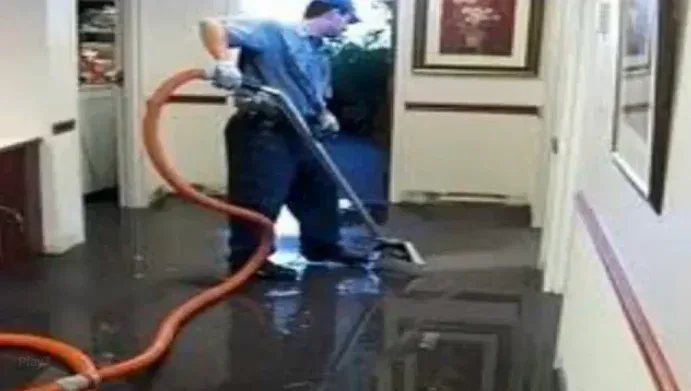
Water in your basement right now? Calls are answered 24/7, and we respond the same day.
Cost
How Much Does Basement Mold Removal Cost in Sioux Center?
Price depends mostly on how much material has to come out, whether the basement is finished, and what caused it. These are 2026 national ranges; you get an exact written price after we see it.
Caught Early
$500–$3,000Accessible surface mold in part of a basement, before it gets into drywall, insulation and framing (Angi).
Part of a Finished Basement
$1,500–$6,000A wall or two of drywall, insulation and pad removed, framing cleaned, the area dried (HomeGuide).
Whole Finished Basement
$6,000–$15,000Removal, cleaning and drying across the whole level; rebuild priced separately (HomeGuide).
What Changes the Price
- Square feet of drywall, insulation and flooring that has to come out
- Whether the water was clean, gray or sewage (Categories 1–3)
- How long it’s been wet
- Access: tight spaces, stairs, stored belongings
- Rebuild, clearance testing and moisture fixes, each priced separately
Moisture Fixes That Pay for Themselves
- Basement dehumidifier: about $800–$2,000 installed (Angi)
- Sump pump battery backup: about $600–$1,200 (Angi)
- Downspout extensions and regrading: often the cheapest fix of all
- Sump discharge to the yard or storm system, never the sanitary sewer (City of Sioux Center)
Quick answer: Does homeowners insurance cover basement mold in Iowa?
Usually only when the mold came from a sudden, covered event like a burst pipe. Mold from long-term seepage or humidity usually isn’t covered, and water from a sump or sewer backup needs a water-backup endorsement on most policies. We give you photos, readings and a written scope for your adjuster either way. Basement mold removal cost in detail.
Prevention
How Do You Keep Mold Out of a Basement in Northwest Iowa?
Almost all basement mold prevention comes down to one thing: keep the basement dry. These six habits handle most of it.
Run a Dehumidifier May–September
Keep basement humidity under 60%, ideally 30–50% (EPA). A cheap hygrometer tells you if it’s working. Drain it to the floor drain or sump so it runs without emptying a bucket. Basement dehumidifier guide.
Test the Sump Every Spring
Pour a bucket of water in the pit before the snowmelt and watch it cycle. Add a battery backup for storm outages.
Move Water Away From the House
Downspout extensions that carry water several feet out, clean gutters, and soil that slopes away from the foundation. Most seepage starts at the surface.
Don’t Store Against Block Walls
Keep cardboard boxes and furniture a few inches off exterior walls and off the floor, on plastic bins and shelving.
Check After Every Big Storm
Look at the floor drain, the sump and the base of the walls after heavy rain. Catching water in the first day saves most of the cost.
Insulate Cold Pipes and Walls
Condensation on cold-water lines and uninsulated rim joists feeds mold in summer; pipes on outside walls can freeze in January.
While you’re thinking about the basement: every Iowa county is in EPA Radon Zone 1, and an Iowa survey found 71.6% of homes above the EPA action level (Iowa HHS). Radon isn’t mold, but it comes in through the same cracks and sump pits, so it’s worth a test.
FAQ
Basement Mold Removal: Frequently Asked Questions
Straight answers to the questions Sioux Center homeowners ask most about basement mold.
How much does basement mold removal cost in Sioux Center?
Accessible surface mold often runs $500 to $3,000. Part of a finished basement with drywall and insulation removal is often $1,500 to $6,000, and a whole finished basement can reach $6,000 to $15,000 (2026 national ranges). You get a written price before any work.
How long does basement mold removal take?
Usually 1 to 3 days of removal and cleaning, plus 3 to 5 days of drying if the basement was recently wet. Rebuild comes after readings confirm it’s dry.
Can I remove basement mold myself?
If it’s under about 10 square feet on a hard surface like painted block or concrete, and the water problem is fixed, yes (EPA). Scrub with detergent and water, dry it completely, and wear an N95 mask, gloves and goggles. Mold on drywall, carpet or insulation needs removal.
Does bleach kill basement mold?
Bleach can lighten mold on hard surfaces, but the EPA doesn’t recommend it as a routine part of mold cleanup, and it doesn’t reach growth inside drywall or wood. Removal and cleaning work; bleach mostly hides the stain.
Why does my basement smell musty but I can’t see mold?
Usually because it’s behind drywall, under carpet or on the back of paneling, or because humidity is high enough to grow mold on dust and stored items. A moisture inspection with meters and a thermal camera finds it without tearing anything out.
Will the mold come back after removal?
Not if the moisture source is fixed. That’s why every basement job includes a moisture correction: a dehumidifier, sump backup, drainage fix or referral to a waterproofing contractor when the wall itself leaks.
Is basement mold dangerous?
The CDC says mold can cause stuffy nose, wheezing and itchy eyes in sensitive people and can trigger asthma attacks. The color doesn’t tell you how harmful it is. It’s a reason to remove it properly, not to panic.
Do you remove mold from finished basements?
Yes. In a finished basement we cut above the wet line in straight lines so the rebuild is clean, and we save doors, trim and sound materials where we can.
Should I run a dehumidifier in my basement?
In Sioux Center, almost always from May through September. Keep humidity under 60% (EPA). A basement dehumidifier installed professionally runs about $800 to $2,000.
Do you handle sewer backups in basements?
Yes. Water from a floor drain or sewer is Category 3. Everything porous it touched comes out, and the area is cleaned and sanitized before rebuilding.
Get Your Basement Checked
Musty Basement? Spots on the Wall? Call Us Today
Tell us what you’re seeing and when it started. We’ll tell you whether it’s a DIY spot or a job for us, what’s likely causing it and what it usually costs. Same-day response in Sioux Center, Orange City, Hull, Rock Valley, Sheldon, Le Mars and the towns around them.
Siouxland Mold Solutions
- Office529 4th St NW, Sioux Center, IA 51250
- Phone(712) 569-1887
- EmailContact@moldremovalsiouxcenter.com
- HoursCall anytime, 24/7, including emergencies
- ResponseSame-day across Sioux Center and our service area