

Crawl Space Mold Removal · Sioux Center, IA
Crawl Space Mold Removal in Sioux Center, IA
Siouxland Mold Solutions cleans mold off crawl space joists, beams and subfloors, removes wet or fallen insulation, dries the space and then keeps it dry with a vapor barrier, full encapsulation or a dehumidifier. We work in farmhouses, older town homes and additions across Sioux Center and 35 nearby towns, with same-day response.
Musty smell in the rooms above, cold damp floors, or insulation hanging off the joists? The crawl space is usually why.
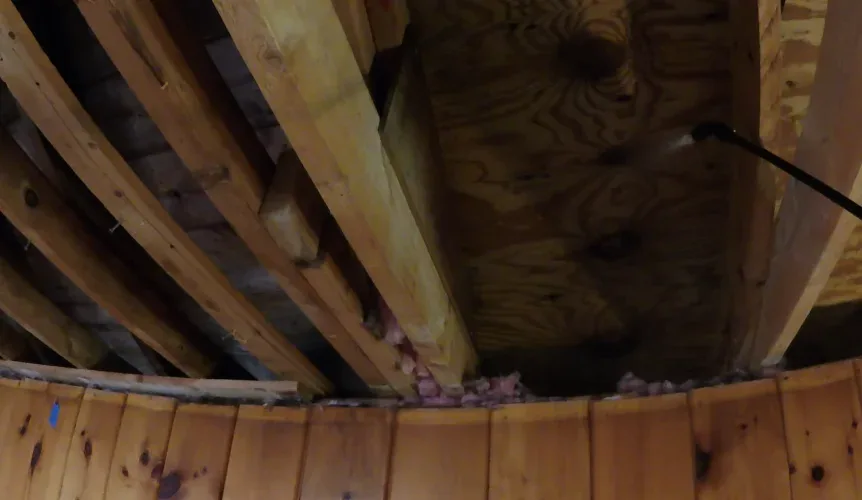
Crawl Space Mold Removal
What Does Crawl Space Mold Removal Involve?
Crawl space mold removal means cleaning mold off the floor joists, beams, sill plates and subfloor (by HEPA vacuuming, scrubbing, wire brushing or sanding), removing wet or moldy insulation and debris, drying the wood to verified readings, and then controlling ground moisture with a vapor barrier, encapsulation or a dehumidifier so it doesn’t grow back.
A crawl space with bare dirt is basically a damp room under your house. Moisture evaporates out of the soil all year, and in July and August, Iowa’s corn-sweat humidity pushes dew points into the 70s. When that humid air hits cool joists and ductwork down there, it condenses, and mold follows. Nationally, basements and crawl spaces account for about 22% of mold removal jobs (Angi).
Crawl spaces also matter more than people think, because air moves up from the crawl space into the living space. Mold and musty odors down there often end up in the rooms above.
Quick answer: Can you just spray a crawl space for mold?
Not as a fix. The EPA doesn’t recommend biocides as a routine part of mold cleanup, and spraying doesn’t remove growth or stop the moisture. The joists have to be cleaned, and the ground moisture has to be controlled.
Warning Signs
What Are the Signs of Mold in a Crawl Space?
Almost nobody goes into their crawl space. These are the signs that show up in the house above, or at the access hatch.
Musty Smell in the Rooms Above
An earthy smell in the rooms over the crawl space, stronger in summer or after rain, and worse when the floor registers are open.
Cold, Damp or Soft Floors
Floors that feel cold and clammy, bounce or feel soft underfoot, or hardwood that cups (edges higher than the middle) from moisture below.
Sagging or Fallen Insulation
Fiberglass batts that have soaked up moisture get heavy and fall out from between the joists. That’s a moisture sign on its own.
White, Gray or Black Growth on Wood
Fuzzy white or dark spotting on joists, beams and the underside of the subfloor, often heaviest near the outside walls and vents.
Standing Water or Wet Soil
Puddles after rain, water lines on the foundation walls, or damp soil that never dries out.
Sweating Ducts and Pipes
Beads of water on metal ductwork and cold-water lines in summer, dripping onto the soil or insulation below.
Local Homes
Which Homes in Northwest Iowa Have Crawl Space Mold Problems?
Most Sioux Center homes have full basements, so crawl spaces here tend to show up in specific kinds of buildings.
Farmhouses and Acreages
Older farmhouses often sit on fieldstone or block foundations with a partial basement and a dirt crawl space under the rest. Many have never had a vapor barrier. Farmhouse and acreage mold.
Additions on Basement Homes
A family room, sunroom or porch added onto a house with a basement often sits over a crawl space. It’s the room that smells musty, even though the basement is fine.
Older Town Homes
About 13% of Sioux Center’s homes were built before 1950. Some older homes in town cores across our area have crawl spaces or low partial basements with dirt floors.
Churches and Small Buildings
Older churches, halls and small commercial buildings sometimes have crawl spaces under part of the building, with ductwork and plumbing running through them.
Quick answer: My house has a basement. Can I still have crawl space mold?
Yes, if part of the house sits over a crawl space, which is common with additions, sunrooms and older homes that were expanded. That’s often the musty room nobody can explain. If you also have basement mold, see basement mold removal.
Local Causes
What Causes Mold in Crawl Spaces Around Sioux Center?
It’s almost always moisture from the ground, the air or a leak, and often all three.
Bare Dirt Floors
Soil releases moisture all year. Without a vapor barrier, that water vapor goes straight into the crawl space air and onto the wood.
Summer Humidity Through Vents
Vented crawl spaces were meant to dry out, but in a humid Iowa July, the vents let in warm, wet air that condenses on the cooler wood and ducts below.
Rain and Poor Drainage
May and June are the wettest months (about 4.2 and 4.5 inches). Short downspouts and soil that slopes toward the house put water right at the foundation.
Plumbing Leaks
Slow drips from supply lines, drains and water heaters in the crawl space can run for months before anyone sees them.
Flooding
The June 20–22, 2024 flood put water into crawl spaces as well as basements, especially in river towns like Alton, Rock Valley and Hawarden.
Ductwork and Dryer Vents
Uninsulated ducts sweat in summer, and a dryer vent that dumps into the crawl space adds gallons of water every week.
| Months | What’s happening in the crawl space | What to do |
|---|---|---|
| March–April | Snowmelt and saturated soil; water pools on bare dirt | Check for standing water; extend downspouts |
| May–June | Wettest months; storms and flooding | Look for water lines on the foundation after big rains |
| July–August | Corn-sweat humidity; condensation on joists and ducts | Peak mold growth; check for sweating ducts and damp wood |
| September–November | Humidity drops; summer growth is easy to spot | Good time for cleanup, barrier or encapsulation |
| December–February | January lows near 9°F; cold floors above | Protect pipes in the crawl space from freezing |
Keeping It Dry
Vapor Barrier or Encapsulation: Which Does Your Crawl Space Need?
Cleaning the mold is only half the job. Here are the ways to keep a crawl space dry, from simplest to most complete. Costs are 2026 national ranges (HomeGuide).
| Option | What it is | Typical cost | Best for |
|---|---|---|---|
| Vapor barrier on the soil | Plastic sheeting (6-mil minimum; thicker lasts longer) over the dirt, seams overlapped | About $2–$4 / sq ft | Stops most ground moisture; the first step for any dirt crawl space |
| Full encapsulation | Heavier liner over the floor and up the walls, seams sealed, vents closed, plus a dehumidifier or conditioned air | About $3–$10 / sq ft | Best long-term moisture control in humid summers |
| Crawl space dehumidifier | Keeps humidity under 60% in a sealed or encapsulated space | Priced with the job | Needed with encapsulation; not useful in a space with open vents |
| Drainage fixes | Downspout extensions, regrading, interior drain or sump if water pools | Varies | When liquid water, not just humidity, is the problem |
The International Residential Code allows an unvented (sealed) crawl space when the ground is covered with a continuous Class I vapor retarder, such as 6-mil polyethylene, with joints overlapped at least 6 inches and sealed and the edges carried up the foundation wall, along with a way to condition or dehumidify the air. We’ll explain which setup fits your house. More about encapsulation.
Our Process
How Do We Remove Crawl Space Mold, Step by Step?
Eight steps, from the first flashlight look to a sealed, dry crawl space.
Inspect and Measure
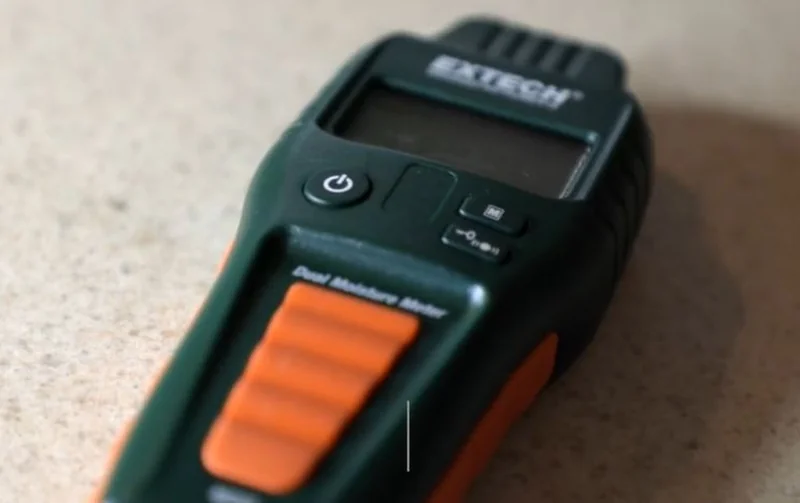
We check wood moisture with a pin meter on joists, beams and sill plates, measure humidity, look for leaks and standing water, and check vents, ducts and insulation. Photos of everything, since you probably haven’t been down there.
Why it matters: Wood that stays around 20% moisture content or higher is at risk for mold. The readings tell us how far it goes.
Written Scope and Price
Cleaning, what has to come out, the moisture control we recommend (barrier, encapsulation, dehumidifier or drainage) and the price for each, in writing.
Why it matters: You can choose the cleanup now and the encapsulation later, or both at once.
Protect the House Above
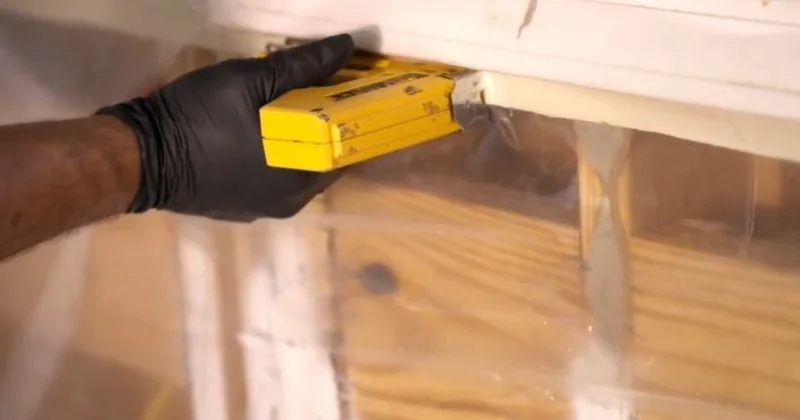
The access is sealed, floor registers above the work area are covered, and a HEPA air scrubber runs to keep dust from moving up into the house.
Why it matters: Crawl space air naturally moves up into the house. We don’t want the cleanup going with it.
Remove Debris and Wet Insulation
Fallen or wet fiberglass, old torn plastic, construction scraps and anything moldy are bagged and removed. Standing water is pumped out.
Why it matters: You can’t clean the wood or lay a new barrier over trash and wet insulation.
Clean the Framing
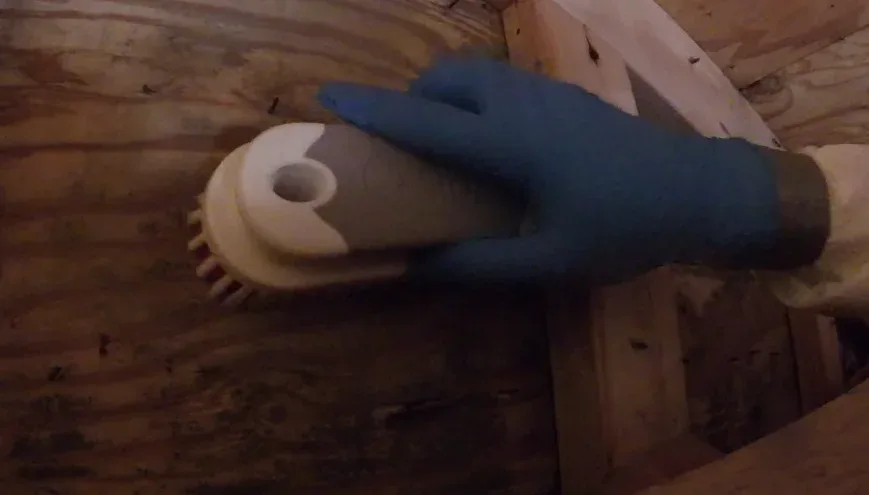
Joists, beams, sill plates and the underside of the subfloor are HEPA-vacuumed and scrubbed, and heavily stained areas are wire-brushed or sanded. Any wood that’s soft or rotted is flagged for repair.
Why it matters: Solid framing almost always stays. It just has to be clean and dry.
Dry the Wood
Dehumidifiers and air movers run until the wood reads dry, compared against unaffected framing. Readings are logged.
Why it matters: Covering or sealing a wet crawl space traps the moisture instead of fixing it.
Control the Moisture
A vapor barrier, full encapsulation with a dehumidifier, drainage fixes or all three, depending on what your crawl space needs. Plumbing leaks and dryer vents get fixed or referred first.
Why it matters: This is what keeps you from paying for the same cleanup again.
Verify and Document
Final moisture readings, dated before-and-after photos and a short written summary. Independent clearance testing is welcome.
Why it matters: Useful for insurance, and for a buyer if you ever sell.
Containment, air filtration and verification work the same way in every part of the house. Our mold remediation process.
Honest Advice
Can You Clean Crawl Space Mold Yourself?
A small spot on one joist, under about 10 square feet, is something a healthy adult can clean with detergent and water while wearing an N95 mask, gloves and goggles (EPA). A crawl space with growth across many joists is a different job.
Why Crawl Spaces Are Hard to DIY
- Tight, dark spaces with wiring, sharp nails, old debris and sometimes pests
- You’re lying right under the growth, so dust falls on you
- Without containment, what you stir up can move into the house above
- Bleach and sprays don’t remove the growth or stop the moisture
- A new plastic sheet laid over wet, moldy debris just hides the problem
What Homeowners Usually Get Wrong
The most common mistake is laying cheap plastic on the dirt and calling it done, with the seams open and the vents still letting in July air. The second is closing the vents without adding a dehumidifier. Sealing a crawl space works, but only as a system.
Quick answer: Should I close my crawl space vents?
Only if the crawl space is being sealed with a proper vapor retarder and the air is dehumidified or conditioned. Closing vents on a dirt crawl space with no barrier traps the moisture and usually makes mold worse.
Quick answer: Should I run a dehumidifier in my crawl space?
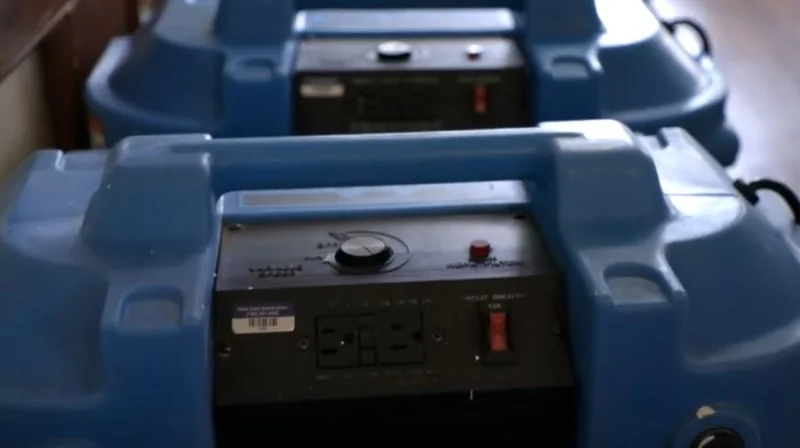
In a sealed or encapsulated crawl space, yes, to keep humidity under 60%. In a vented crawl space it mostly dehumidifies the outdoors. Dehumidifier sizing and setup.
Cost
How Much Does Crawl Space Mold Removal Cost?
Crawl space jobs are priced by square footage, how much growth there is, access height, and which moisture control you choose. These are 2026 national ranges; you get an exact written price after we look.
Mold Cleanup
$500–$2,000Cleaning joists and subfloor in a typical crawl space (Angi). Larger or harder-to-reach spaces run up to about $4,000 (HomeGuide).
Vapor Barrier
$2–$4 / sq ftNew plastic over the soil with overlapped seams, after cleanup and debris removal (HomeGuide).
Full Encapsulation
$3–$10 / sq ftSealed liner on the floor and walls, vents closed and a dehumidifier. A 1,000 sq ft crawl space works out to about $3,000–$10,000 (HomeGuide).
Quick answer: Is crawl space mold covered by insurance?
Usually not when it comes from long-term humidity or ground moisture, which insurers treat as maintenance. It may be covered when a sudden, covered event like a burst pipe caused it. We give you dated photos and a written scope for your adjuster either way. Mold remediation cost in Sioux Center.
Musty smell coming up through the floor? Call and we’ll tell you what’s likely going on down there.
FAQ
Crawl Space Mold Removal: Frequently Asked Questions
Answers to the questions northwest Iowa homeowners ask most about crawl space mold, vapor barriers and encapsulation.
How much does crawl space mold removal cost?
Cleanup in a typical crawl space runs about $500 to $2,000, and up to about $4,000 for larger or harder-to-reach spaces (2026 national ranges). A vapor barrier adds about $2 to $4 per square foot and full encapsulation about $3 to $10 per square foot.
Is crawl space mold dangerous?
The CDC says mold can cause stuffy nose, wheezing and itchy eyes in sensitive people and can trigger asthma attacks. Because air moves up from the crawl space into the house, crawl space mold and odors can reach the rooms above.
What’s the difference between a vapor barrier and encapsulation?
A vapor barrier is plastic over the dirt floor. Encapsulation is a heavier liner over the floor and up the walls with sealed seams, closed vents and a dehumidifier or conditioned air. Encapsulation controls humidity much better in humid Iowa summers.
Should crawl space vents be open or closed?
Open vents let humid summer air in, which often causes condensation and mold. Closing them only works when the crawl space is properly sealed with a vapor retarder and the air is dehumidified or conditioned.
How long does crawl space mold removal take?
Cleanup usually takes 1 to 2 days, plus drying time. A vapor barrier or encapsulation typically adds 1 to 3 days depending on size and access.
Can I put plastic down over the mold?
Not over wet debris or moldy wood. The framing needs to be cleaned and dried first, and the plastic needs overlapped, sealed seams to work. Plastic over a wet, moldy crawl space traps the problem.
Why do my floors feel cold and soft?
Moisture from a damp crawl space can make floors feel cold and clammy, cup hardwood, and in long-running cases soften the subfloor. An inspection with a moisture meter tells you how far it’s gone.
Do you work on farmhouse crawl spaces?
Yes. Farmhouses and acreages with fieldstone or block foundations and dirt crawl spaces are a big part of crawl space work in northwest Iowa. We serve rural routes across five counties.
Will the mold come back after cleaning?
Not if the moisture is controlled. That’s why we recommend a vapor barrier, encapsulation, a dehumidifier or drainage fixes based on what we find, and we’ll explain which one your house actually needs.
Do you need to test crawl space mold?
Usually not to decide on removal, since the CDC says any indoor mold should be removed regardless of type. Testing can help in real estate deals or to confirm the job is done, and we recommend an independent tester for that.
Get Your Crawl Space Checked
Musty Floors or Mold on the Joists? Call Us Today
Tell us what you’re noticing upstairs or what you saw at the access hatch. We’ll tell you what’s likely going on, whether it needs cleaning, a barrier or both, and what it usually costs. Same-day response in Sioux Center and on farms and acreages across five counties.
Siouxland Mold Solutions
- Office529 4th St NW, Sioux Center, IA 51250
- Phone(712) 569-1887
- EmailContact@moldremovalsiouxcenter.com
- HoursCall anytime, 24/7, including emergencies
- ResponseSame-day across Sioux Center and our service area