

Mold Behind Drywall · Sioux Center, IA
Mold Behind Drywall in Sioux Center, IA
You can smell it, but you can’t see it. Siouxland Mold Solutions finds mold hiding behind drywall with moisture mapping and thermal imaging, opens the wall only where needed, removes what’s affected and dries the cavity before it’s closed. Same-day response, calls answered 24/7.
Mold behind a wall usually means water behind a wall. We find the water first, then deal with the mold.
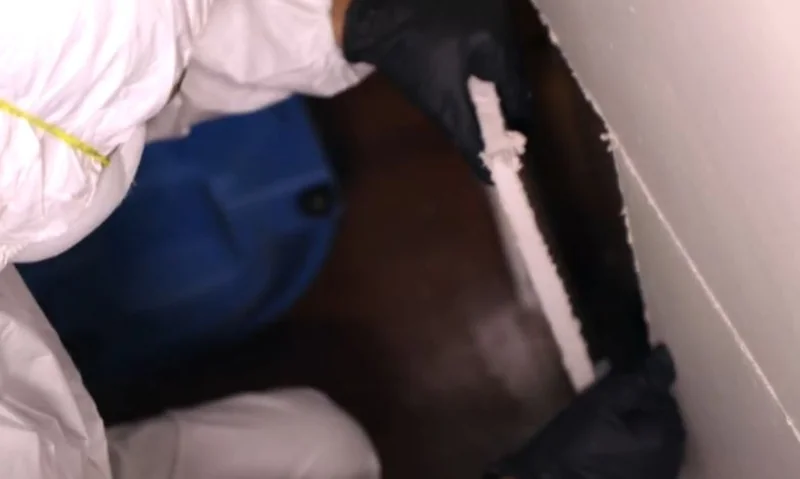
Mold Behind Drywall
How Does Mold Get Behind Drywall, and How Do You Know It’s There?
Water gets in from plumbing, the roof, a window, a foundation or humidity, wets the back of the drywall or the paper facing, and mold starts to grow in 24 to 48 hours if it stays wet. Drywall’s paper surface is food for mold, so the damage hides inside the wall while the front looks fine.
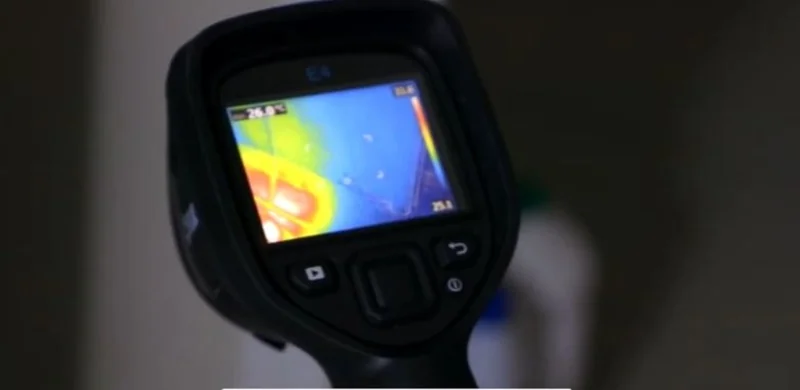
Signs include a musty smell, staining, bubbling paint, warped or soft spots, and a wall that feels damp or cold. A moisture meter and an infrared camera help us confirm where the water is without tearing the wall apart. The CDC and Iowa HHS don’t recommend routine air testing to decide this; finding the moisture does.
If water or mold has been in drywall, cutting out the affected piece is standard practice. The EPA’s guidance says porous materials that stay moldy should be removed and discarded, and hard-to-clean porous materials like drywall belong in that group.
Quick answer: How do I know if there’s mold inside my wall?
A musty smell with no visible source, stains or bubbling paint, a damp-feeling wall and a recent leak all point to it. A moisture meter or thermal camera narrows it down. Don’t cut a big hole yourself; you can spread spores.
Warning Signs
What Are the Signs of Mold Behind Drywall?
You often notice the symptoms before the cause.
Persistent Musty Smell
Stronger on humid days or when the HVAC runs.
Stains and Discoloration
Yellow, brown or gray patches, sometimes with a ring.
Bubbling, Peeling or Cracking Paint
Moisture pushing out from behind the wall. Bubbling paint on walls.
Soft, Damp or Cold Spots
Press gently. Drywall that crumbles or feels spongy is wet.
Warped Baseboards or Trim
Moisture wicking from the wall into the bottom of the room.
Allergy-Like Symptoms Indoors
Not a diagnosis, but sneezing or coughing that eases away from home is worth noting.
Quick answer: Can I just paint over a stained wall?
No. Paint hides the stain, not the moisture or the mold. The paint will bubble again and the growth keeps going behind it.
Local Causes
What Leaves Sioux Center Walls Wet?
Local weather and house types decide which one is most likely.
Plumbing Leaks
Supply lines, drains and ice-maker connections inside walls. About 13% of Sioux Center homes predate 1950, the median home dates to 1979, and roughly a third were built since 2000.
Roof and Window Leaks
Hail and wind in 2025 and 2026 opened roofs. Water travels down inside walls.
Ice Dams and Attic Moisture
Winter melt and refreeze push water under shingles and into exterior walls.
Foundation and Basement Seepage
Sioux Center gets about 34.8 inches of snow a year and its wettest months, May and June, run 4.2 and 4.5 inches (NOAA normals). Block walls wick moisture up into framing and drywall.
Summer Humidity
Dew points in the 70s sweat on cold pipes and cooled walls.
Condensation on Cold Walls
Exterior walls with poor insulation collect moisture inside.
DIY or Professional?
Should You Open the Wall Yourself?
A small peek can help. A large demolition can make things worse.
| What you’re seeing | Our advice | Why |
|---|---|---|
| A small stain, no smell, dry meter reading | Monitor it | May be old and dry |
| Musty smell, damp feel, no visible mold | Call us | Moisture mapping before opening |
| Visible mold on drywall, under 10 sq ft | Can DIY with PPE if the source is fixed | EPA guidance |
| Soft or crumbling drywall | Call us | Likely wet and moldy |
| Mold over 10 sq ft or on insulation | Call us | Beyond DIY scope |
| Water still coming in | Fix the leak first, then call | Mold will keep coming back |
Never cut into a wall that might have wiring or pipes without checking. Source: EPA, A Brief Guide to Mold, Moisture and Your Home.
Our Process
How Do We Find and Remove Mold Behind Drywall?
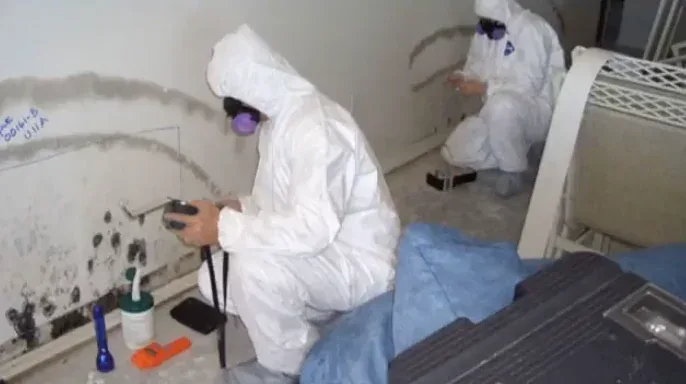
We open walls only where needed, and only after the water is understood.
Inspect and Map Moisture
Meter, thermal imaging and a borescope map the wet area. We track the water back to its source.
Why it matters: You can’t fix what you can’t find.
Stop the Water
Plumbing, roof or humidity problem is addressed or referred to the right trade.
Why it matters: Mold regrows if water continues.
Contain the Work Area
Plastic barriers and negative air keep spores from traveling.
Why it matters: Opening walls without containment spreads mold.
Remove Affected Drywall and Insulation
Cut out wet or moldy material; bag and seal it in the work area.
Why it matters: Porous material doesn’t clean reliably.
Clean and Dry the Cavity
HEPA vacuum and damp wipe studs, then dry with fans and dehumidifiers.
Why it matters: Closing a wet wall brings mold back.
Document and Hand Back
Readings and photos show the wall was dry before repair. You or your contractor rebuild.
Why it matters: Your insurer and your contractor need this.
Water source issue? See water damage restoration in Sioux Center.
Options
Should You Cut Out, Clean or Replace Drywall?
The right answer depends on how long it was wet and what it was wet with.
| Situation | Typical call | Why |
|---|---|---|
| Clean water, dried within 24–48 hours | Dry it and monitor | Mold usually doesn’t start (EPA) |
| Wet for days or weeks | Cut out and replace | Paper facing supports growth |
| Visible surface mold on paint | Clean if firm, replace if soft | Depends on depth |
| Sewage or floodwater | Remove and discard | Category 3 contamination |
| Mold on insulation | Remove | Porous, can’t be cleaned |
Often Salvageable
- Hard surfaces and sound framing
- Drywall dried quickly after clean water
- Studs and joists with surface mold
Usually Replaced
- Drywall wet for days or weeks
- Insulation with mold
- Anything from sewage or flood
Cost
What Does Mold Behind Drywall Cost to Fix?
National 2026 ranges. We give a written scope and price before work starts.
Small Accessible Area
$500–$4,000Typical national range for mold limited to one area.
Whole-Job Remediation
$1,200–$3,750Common national range; $10–$25 per square foot is a rule of thumb.
Repair After Remediation
SeparateDrywall, paint and trim are rebuilt by you or a contractor.
What Changes the Price
- Size of the affected area
- Insulation and framing involvement
- Water source and access
- Finishes to protect
Documentation for Your Insurer
- Dated photos
- Moisture readings
- Source statement
- Written scope
Quick answer: Is mold behind drywall covered by insurance?
Often only if the water was sudden and covered, such as a burst pipe. Long-term leaks and humidity are usually excluded. Ask your agent before work starts.
Prevention
How Do You Prevent Mold Behind Walls?
Find leaks early and keep humidity down.
Fix Leaks Fast
Dry wet materials within 24–48 hours (EPA).
Keep Humidity Under 60%
Ideally 30–50%.
Inspect Under Sinks Yearly
Look for drips, stains and swelling.
Insulate Exterior Walls
Reduces condensation on cold wall surfaces.
Maintain Roof and Windows
Reseal gaps before winter.
Check After Storms
Hail and wind can open leaks that show weeks later.
Think there’s mold in your walls? Call now. We find it and fix it the right way.
FAQ
Mold Behind Drywall: Frequently Asked Questions
Answers to common questions.
Can mold grow behind drywall without a leak?
Yes, from condensation or high humidity, especially on cold exterior walls.
Will encapsulating or painting over work?
Not if the drywall is wet or moldy. The material should be removed.
How big a hole do you cut?
As small as it can be while reaching sound material. We follow the moisture, not a fixed size.
Is mold behind drywall dangerous?
It can irritate people with allergies or asthma and damages the wall. Cleanup and fixing moisture are the priorities.
Can I use a moisture meter myself?
Yes, an inexpensive pin meter gives a rough idea, but it won’t see inside a wall. A professional adds thermal imaging.
Do you handle mold behind walls outside Sioux Center?
Yes. Same-day response in Sioux Center (51250), Orange City (51041), Hull (51239), Rock Valley (51247), Sheldon (51201), Le Mars (51031) and the towns around them. Call anytime, 24/7, and we’ll tell you honestly when we can be there.
Do I need a mold test first?
Usually not to decide on cleanup. The CDC doesn’t recommend routine mold testing, and neither does Iowa HHS. A moisture inspection finds the cause, which is what matters. Independent clearance testing after the work is welcome if you want lab confirmation.
Will insurance cover it?
Often only when the damage came from a sudden, covered event like a burst pipe or a storm that opened the roof. Long-term seepage, humidity and flooding are usually excluded, and sump or sewer backup needs a water-backup endorsement. We give you dated photos, moisture readings and a written scope for your adjuster either way.
Get Help Today
Suspect Mold in Your Walls? Call Us Today
Tell us what you’ve noticed and when. We’ll check the moisture and tell you whether the wall needs opening. Same-day response in Sioux Center and nearby towns.
Siouxland Mold Solutions
- Office529 4th St NW, Sioux Center, IA 51250
- Phone(712) 569-1887
- EmailContact@moldremovalsiouxcenter.com
- HoursCall anytime, 24/7, including emergencies
- ResponseSame-day across Sioux Center and our service area