

Sump Pump Failure & Mold · Sioux Center, IA
Sump Pump Failure and Mold in Sioux Center, IA
Your sump quit and the basement took water. Siouxland Mold Solutions extracts the water, dries the structure, removes what mold has already reached and helps you prevent a repeat. Same-day response in Sioux Center and nearby towns, calls answered 24/7.
A failed sump rarely fails on a nice day. It fails when the storm knocks out the power. Here’s what to do in the first 48 hours, and how to make sure it doesn’t happen again.
Sump Pump Failure and Mold
What Happens When a Sump Pump Fails, and Can It Cause Mold?
When a sump fails, groundwater or runoff fills the pit and spills onto the basement floor. Wet drywall, carpet pad, boxes and wall insulation can start growing mold within 24 to 48 hours (EPA). Acting in that window usually prevents it.
Pumps fail for ordinary reasons: a power outage, a stuck float, a clogged intake screen, a frozen or blocked discharge line, a missing check valve that makes the pump cycle until it burns out, or simple age. Angi puts a typical lifespan at 7 to 10 years. NDSU Extension adds that a pump too small for the job fails under load, and recommends testing before the wet season.
In Sioux Center the timing is the problem. Spring snowmelt, wet Mays and Junes, and storms that cut power all arrive when the pit is working hardest. The July 28, 2025 derecho and the June and September 2026 storms were reminders that the power goes out right when you need the pump.
Quick answer: My sump pump failed and the basement is wet. What do I do first?
Make sure it’s safe to enter and shut off power to the basement if water is near outlets. Stop more water coming in if you can, photograph everything, and start removing water. If it’s deep, pump about 2 feet at a time (ISU Extension). Then call within 48 hours; carpet pad and wet drywall usually need to come out.
Warning Signs
How Do You Know Your Sump Pump Is Failing or Has Failed?
Pumps give hints before they quit. These are the ones to check, and the signs that water has already done damage.
The Pump Doesn’t Turn On
Pour a bucket of water into the pit. If the float rises and the pump doesn’t start, or it runs without moving water, it’s failing.
Loud or Constant Running
A pump that runs nonstop or short-cycles may have a stuck float, a missing check valve or a frozen discharge line.
Water in the Pit Near the Top
A pit that’s full and not draining means the pump isn’t keeping up.
Damp Carpet or Floor Near the Pit
A dark spot around the pit or along the wall nearest it often shows up before standing water does.
Rust or Corrosion
On the pump, pipes or metal shelving, a sign of persistent moisture.
Age Over 10 Years
Even a pump that works is on borrowed time. Replace it before the storm.
Quick answer: How do I test my sump pump?
Check that the discharge isn’t frozen or blocked, then pour water slowly into the pit and watch the pump turn on and off at least twice (NDSU Extension). SDSU Extension suggests clearing the intake and running it for about 10 seconds to listen. Do this before spring thaw and before storm season.
Local Causes
Why Do Sump Pumps Fail in Northwest Iowa?
Most failures trace to one of these, and several are worse in our climate.
Power Outages in Storms
Derecho winds in July 2025 (99 mph at Sioux Center) and the June 29–30 and September 1, 2026 storms knocked out power across Siouxland. No power, no pump.
Frozen Discharge Lines
Sioux Center gets about 34.8 inches of snow a year, with January lows near 9°F. A frozen or buried discharge pipe makes the pump overheat and fail.
Heavy Spring and Early-Summer Rain
May and June average 4.2 and 4.5 inches. A pump sized for ordinary rain can be overwhelmed by a storm.
June 2024 High Groundwater
After record river flooding, soils stayed saturated and sumps ran for weeks. Pumps that ran continuously wore out early.
Older Basements
About 13% of Sioux Center homes predate 1950, and many have shallow or undersized pits.
Stuck Floats and Clogged Screens
Debris in the pit jams the float switch. Check it when you test.
Hail and wind can also open roofs: mold after a roof leak.
DIY or Professional?
What Can You Handle Yourself After a Sump Failure, and When Should You Call?
Fast action matters more than anything else. Here’s the sort.
| What you’re seeing | Our advice | Why |
|---|---|---|
| A little water on the floor near the pit, dried within a day | DIY: wet vac, fans, dehumidifier, replace the pump | Fast drying prevents growth |
| Wet carpet and pad | Pull up the pad; call if the carpet was soaked | Pad holds water and never fully dries |
| Water has been standing for more than a day | Call: extraction, drying and removal | Growth starts at 24–48 hours |
| Water came from a floor drain or sewer | Call: Category 3 water | Contaminated; porous materials come out |
| Wet finished walls or drywall | Call: moisture mapping and removal | Mold can grow inside the wall |
| Visible mold after drying | Call if over 10 sq ft or on drywall | EPA 10 sq ft guideline |
| Pump keeps failing | Call a plumber and add a backup | Cause may be sizing or discharge |
Never wade into water near outlets or the panel. For deep water, ISU Extension advises pumping about 2 feet at a time so walls aren’t stressed. Source: EPA, A Brief Guide to Mold, Moisture and Your Home.
Our Process
How Do We Clean Up After a Sump Pump Failure, Step by Step?
Water first, then mold, then the fix so it doesn’t repeat.
Safety and Extraction
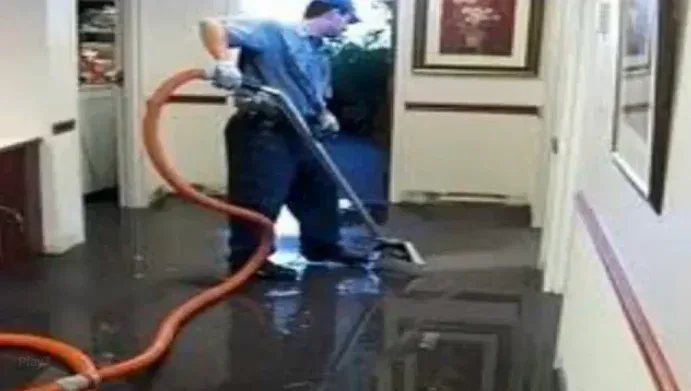
We make the space safe, then pump and wet-vac standing water. Deep water is removed in stages.
Why it matters: The faster water goes, the less gets into the walls.
Moisture Mapping
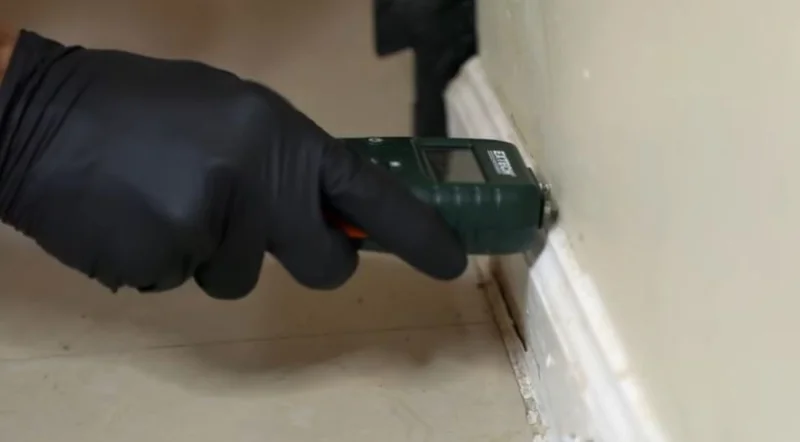
Meters and a thermal camera show how far water traveled into drywall, framing and flooring.
Why it matters: Water wicks higher than it looks.
Remove What Can’t Dry
Carpet pad, wet drywall, insulation and cardboard come out. Carpet and rugs are saved when the water was clean and was caught fast.
Why it matters: Porous material stays wet and grows mold.
Dry to Verified Readings
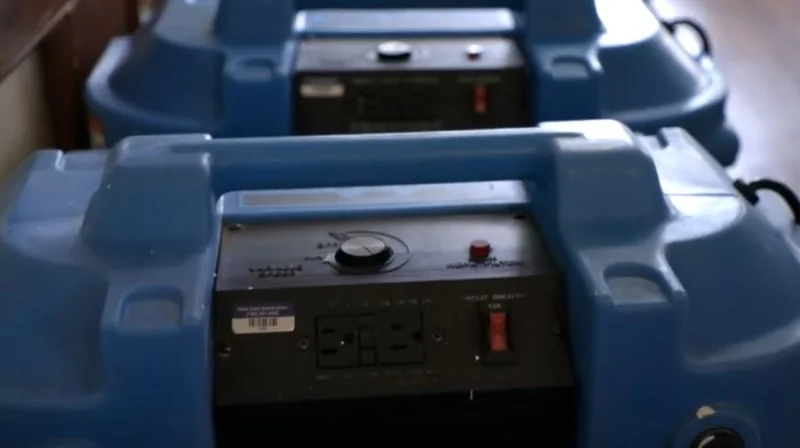
Dehumidifiers and air movers run until readings match unaffected materials. We log them daily.
Why it matters: Closing it up wet is how mold ends up behind new drywall.
Treat Any Mold
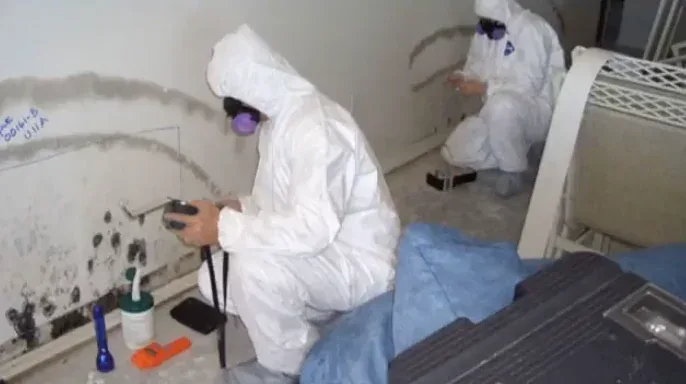
If growth has started, we contain, remove and HEPA-clean to ANSI/IICRC S520.
Why it matters: Spores shouldn’t reach the rest of the home.
Fix the Pump System
We recommend a properly sized pump, check valve, battery backup and discharge that is clear and at least 20 feet from the house.
Why it matters: So the next storm is just a storm.
Full water side: flooded basement cleanup in Sioux Center.
Backup Options
Battery Backup or Water-Powered Backup: Which Is Better for a Sump?
Both protect you when the main pump loses power. They work differently.
| Type | How it works | Pros | Watch for |
|---|---|---|---|
| Battery backup | A second pump on a battery runs when power fails | Works anywhere, handles outages | Batteries last about 3–7 years; test them |
| Water-powered backup | Uses municipal water pressure to pump out water | No battery, no electricity | Needs city water pressure; doesn’t work with well water |
| Generator | Runs the main pump during an outage | Powers other things too | Needs fuel and setup |
Good Habits
- Test the pump every spring
- Clean the intake screen
- Check the discharge outside
- Replace pumps around the 10-year mark
Mistakes That Cost Money
- Discharging into the sanitary sewer
- No check valve
- Discharging near the foundation
- Skipping the backup in a finished basement
Cost
How Much Does Sump Pump Replacement and Cleanup Cost?
Pump costs and cleanup costs are separate. These are national 2026 ranges.
Replace a Pump
$309–$755Typical range, full range $120–$1,350 (Angi, updated Aug 2026).
Battery Backup Installed
$600–$2,000+Water-powered $300–$1,000; combo $1,000–$3,000 (HomeGuide).
Cleanup and Mold Removal
$1,200–$3,750Typical mold remediation range; accessible basement spots start near $500.
What Changes the Cleanup Price
- How long water stood
- How much finished material got wet
- Water category
- Access and stored belongings
For Your Insurer
- Photos of the pit, the pump and the water line
- The failed pump’s model and age
- Moisture readings and a written scope
- Whether you have a water-backup endorsement
Quick answer: Does homeowners insurance cover a sump pump failure?
Usually only with a water-backup (sump overflow) endorsement. Without it, water that backs up or overflows from a sump is often excluded. Check your policy before the storm, not after.
Prevention
How Do You Keep a Sump Pump From Failing Again?
A few steps cover most failures.
Test Every Spring
Before the thaw and again before storm season.
Add a Backup
Battery or water-powered, tested every few months.
Clear the Discharge
At least 20 feet from the house, not frozen, not buried.
Run a Dehumidifier
Keep humidity under 60% (EPA).
Extend Downspouts
At least 4 feet beyond the wall, ideally farther (UMN Extension).
Know Your Alarm
A high-water alarm gives early warning.
Sump failed and the basement is wet? Call now. Same-day response, calls answered 24/7.
FAQ
Sump Pump Failure and Mold: Frequently Asked Questions
What Sioux Center homeowners ask us after a sump failure.
How long until mold grows after a sump failure?
Mold can start in 24 to 48 hours on wet drywall, carpet and wood (EPA). Dry fast and you can often avoid it.
How often should I replace a sump pump?
Angi says 7 to 10 years is typical. Replace sooner if it runs constantly, is noisy or has failed a test.
Where should my sump discharge go?
At least 20 feet from the house, onto the yard (NDSU, SDSU Extension), not into the sanitary sewer, a septic field or a neighbor’s lot. Ask your town about its rules.
Do I need a battery backup?
If your basement is finished or holds valuables, yes. FEMA recommends a backup for electrical failure.
Can I save my carpet after a sump failure?
Sometimes, if the water was clean and it’s dried within a day or two. Carpet pad is almost always replaced.
My sump runs all the time. Is that bad?
It can mean high groundwater, a stuck float or a failing check valve. If it never stops, have it looked at.
Do you handle sump failure cleanup outside Sioux Center?
Yes. Same-day response in Sioux Center (51250), Orange City (51041), Hull (51239), Rock Valley (51247), Sheldon (51201), Le Mars (51031) and the towns around them. Call anytime, 24/7, and we’ll tell you honestly when we can be there.
Do I need a mold test first?
Usually not to decide on cleanup. The CDC doesn’t recommend routine mold testing, and neither does Iowa HHS. A moisture inspection finds the cause, which is what matters. Independent clearance testing after the work is welcome if you want lab confirmation.
Will insurance cover it?
Often only when the damage came from a sudden, covered event like a burst pipe or a storm that opened the roof. Long-term seepage, humidity and flooding are usually excluded, and sump or sewer backup needs a water-backup endorsement. We give you dated photos, moisture readings and a written scope for your adjuster either way.
Get Help Today
Sump Pump Failed? Call Us Today
Tell us how long the water’s been down and what’s wet. We’ll tell you what to do right now and be there the same day.
Siouxland Mold Solutions
- Office529 4th St NW, Sioux Center, IA 51250
- Phone(712) 569-1887
- EmailContact@moldremovalsiouxcenter.com
- HoursCall anytime, 24/7, including emergencies
- ResponseSame-day across Sioux Center and our service area