

Attic Mold Removal · Sioux Center, IA
Attic Mold Removal in Sioux Center, IA
Siouxland Mold Solutions removes mold from attic sheathing, rafters, trusses and insulation, and fixes the reason it grew: warm, moist household air leaking into a cold attic, bathroom fans venting into the attic, blocked soffit vents, ice dams or a storm-damaged roof. Same-day response in Sioux Center and 35 nearby towns.
Found frost on the roof nails on a cold morning, or dark staining on the plywood? Call before the next thaw turns it into water on your ceiling.
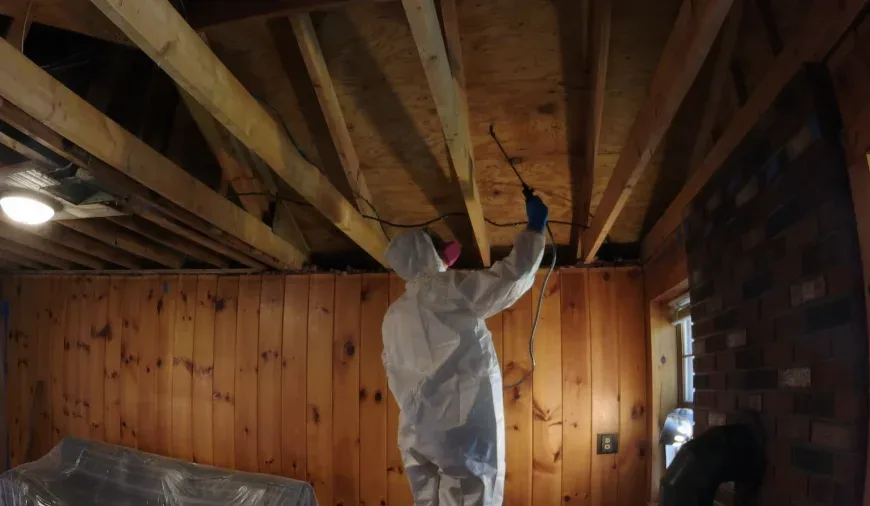
Attic Mold Removal
What Is Attic Mold Removal, and Why Does It Happen Here?
Attic mold removal means cleaning mold off roof sheathing, rafters and trusses (by HEPA vacuuming, wire brushing, sanding or blasting), removing insulation that’s wet or contaminated, replacing any sheathing that’s gone soft, and then fixing the ventilation and air leaks that let moisture build up in the first place.
In northwest Iowa, attic mold is almost always a winter problem that shows up later. Sioux Center averages January lows around 9°F and has hit −37°F. When warm, humid air from the house leaks into an attic that cold, it condenses on the underside of the roof deck and freezes into frost. When the weather breaks, that frost melts, soaks the plywood, drips onto the insulation and sometimes stains the ceiling below. A few winters of that and the sheathing turns gray, then black.
The other big causes are simpler: a bathroom, kitchen or dryer fan that dumps its moist air into the attic instead of outside (State Farm lists it among the common causes), and roof leaks from ice dams or hail. Clean the mold without fixing those, and it comes back.
Quick answer: Is attic mold dangerous?
Attic mold is usually less of an immediate indoor-air concern than basement mold, because the attic is separated from living space and air generally moves up and out. But it’s a sign of ongoing moisture that can soften sheathing, rust nails and ruin insulation, and it doesn’t go away on its own. Fix the cause, then clean it.
Warning Signs
What Are the Signs of Mold in Your Attic?
Most people never go into the attic, so these are the signs that tell you it’s time to look, or to have someone look for you.
Frost on Nail Tips
On a very cold morning, the nails poking through the roof deck are white with frost. That’s moisture from your house, and it melts onto the wood when it warms up.
Gray or Black Staining on Plywood
Staining on the underside of the roof sheathing, often worst on the north slope, which gets the least sun and stays coldest.
Ceiling Stains After a Thaw
Brown rings on upstairs ceilings in February or March that weren’t from a roof leak. Often called “attic rain.”
Damp or Matted Insulation
Insulation that’s compressed, stained or clumped under dark sheathing, or around a bathroom fan housing.
Rusty Nails and Soft Sheathing
Rust stains around nail heads and plywood that feels soft or looks delaminated. Repeated wetting weakens the deck.
Musty Smell Upstairs
A musty or damp smell in upstairs closets or bedrooms, especially near the attic hatch or can lights.
Quick answer: When is the best time to check my attic for mold?
On the first really cold morning of winter. With a flashlight, look at the nail tips and the underside of the roof deck. Frost on the nails means warm, moist air is getting into the attic. In spring, look for staining and water marks after the thaw.
Local Causes
What Causes Attic Mold in Sioux Center Homes?
Attic mold is a moisture problem, and in an attic that moisture usually comes from inside the house, not from the roof. Here are the six causes behind most attic mold in northwest Iowa.
Bath and Kitchen Fans Venting Into the Attic
A fan duct that ends in the attic, has come loose, or points at a soffit vent blows shower steam straight onto the roof deck. It’s one of the most common causes, and one of the cheapest to fix. Bathroom ventilation and mold.
Air Leaks From the House
Warm air rises and escapes through the attic hatch, around can lights, plumbing vents, chimneys and wiring holes in the top plates. It carries household moisture from cooking, showers and people breathing.
Blocked Soffit Vents
Blown-in insulation often covers the soffit vents, so cold outside air can’t flow through the attic to carry moisture out. Baffles at the eaves keep the path open.
Winter Frost and Thaw
With January lows near 9°F, moisture that reaches the roof deck freezes. Each thaw soaks the wood again. Attic frost and mold.
Ice Dams
Heat escaping into the attic melts snow on the roof; it refreezes at the colder eaves and backs water under the shingles, into the sheathing and the wall below. Ice dams and mold.
Hail and Wind Damage
On Sept 1, 2026, baseball-size hail fell near Orange City and dime-size hail just south of Sioux Center, with 70–80+ mph gusts in Hull (NWS Sioux Falls). Damaged shingles can leak slowly for months before a stain shows.
Newer, tighter homes aren’t immune. About a third of Sioux Center’s homes were built since 2000, and a tight house with high indoor humidity can push more moisture into the attic through the few leaks it has, especially with a bath fan that isn’t ducted outside.
What You See, What It Means
What Is Your Attic Telling You?
Where the mold is and what it looks like usually tells you the cause before any testing.
| What you see | Most likely cause | What fixes it |
|---|---|---|
| Frost on nails and sheathing in winter | Warm, moist air leaking up; poor ventilation | Air sealing, soffit baffles, fan ducts checked |
| Staining concentrated around one spot | A bath or kitchen fan venting into the attic | Reroute the duct outside through a roof or wall cap |
| Black staining along the lower roof edge | Blocked soffit vents or ice dams | Baffles, clear soffits, reduce heat loss |
| Dark sheathing mostly on the north slope | Condensation on the coldest surface | Air sealing and ventilation balance |
| Wet insulation and a ceiling stain after a storm | Roof leak from hail or wind damage | Roof repair first, then removal and drying |
| Musty smell near the attic hatch | Hatch not sealed or insulated | Weatherstrip and insulate the hatch |
Removal Methods
How Is Mold Removed From Attic Sheathing and Rafters?
The method depends on how much growth there is and whether the wood is still sound. The rule under ANSI/IICRC S520 is the same as anywhere else: remove the growth, don’t just cover it.
| Method | When it fits | Notes |
|---|---|---|
| HEPA vacuum and damp wipe | Light surface growth on sound sheathing and framing | Fast, low-dust, no residue |
| Wire brushing or sanding | Moderate growth and staining on rafters and trusses | Removes growth from the wood surface |
| Soda or dry-ice blasting | Large areas of stained sheathing across the attic | Faster for big jobs; needs full containment and cleanup |
| Sheathing replacement | Plywood or OSB that’s soft, swollen or delaminated | Done with the roofer when shingles come off |
| Insulation removal and replacement | Insulation that’s wet, matted, moldy or contaminated | HEPA vacuum removal, then re-insulate after fixes |
| Encapsulant or sealant | After cleaning, as a final coat on cleaned wood | Never instead of cleaning; optional in most attics |
What a Proper Attic Job Includes
- Moisture readings on the sheathing and framing
- The living space protected at the hatch or access
- Growth physically removed, not just sprayed
- Wet or contaminated insulation removed with a HEPA vacuum
- The moisture source corrected before re-insulating
- Dated before-and-after photos
Attic Jobs to Walk Away From
- Spray-only or “fogging” treatments with no cleaning
- White or tinted paint sprayed over stained sheathing to hide it
- No mention of bath fans, air sealing or soffit vents
- Blasting a whole attic when a few rafters need cleaning
- Pressure to sign before you’ve seen photos
Our Process
How Do We Remove Attic Mold, Step by Step?
Seven steps, from finding the cause to putting the insulation back.


Inspect the Attic and the House Below
We check the sheathing and framing with a moisture meter, look at every fan duct, the soffits, the hatch and the insulation, and check upstairs ceilings with a thermal camera for cold spots and air leaks.
Why it matters: The cause is usually visible from the attic if you know where to look.
Written Scope and Price
What gets cleaned, what gets removed, how the living space is protected, and which ventilation or air-sealing fixes are part of the job, all in writing.
Why it matters: You see the whole cost, including the fix, up front.
Protect the Living Space
Drop cloths and plastic at the hatch and in the hallway below, and a HEPA air scrubber to keep dust from traveling into the house.
Why it matters: Attic dust and insulation fibers shouldn’t end up in your bedrooms.
Remove Wet or Moldy Insulation
Contaminated insulation is removed with a HEPA insulation vacuum and bagged, which also exposes the top plates and bypasses we need to seal.
Why it matters: You can’t seal air leaks you can’t see.
Clean the Sheathing and Framing
HEPA vacuuming, damp wiping, wire brushing or sanding, or blasting for large areas. Soft or delaminated sheathing is marked for replacement.
Why it matters: Cleaning, not covering, is what makes the result last.
Fix the Moisture Source
Reroute bath and kitchen fans to the outside, add soffit baffles, seal air leaks at can lights, the hatch and plumbing stacks, and balance intake and exhaust ventilation. Roof or chimney repairs go to a roofer.
Why it matters: This is the difference between a clean attic and a clean attic that stays clean.
Verify and Re-Insulate
Final moisture readings and photos, then insulation goes back in at the right depth without blocking the soffit vents. Independent clearance testing is welcome if you want it.
Why it matters: You get proof, and an attic that’s warmer below and colder above, the way it should be.
Containment, air filtration and verification follow the same rules in every part of the house. Our mold remediation process.
Prevention
How Do You Prevent Attic Mold in a Northwest Iowa Winter?
Keep household moisture out of the attic and let the attic breathe. That means sealing air leaks from the house, venting every fan outdoors, keeping the soffit vents open and keeping the attic floor well insulated so the roof deck stays cold.
- Vent every bath, kitchen and dryer fan outdoors through a roof or wall cap, never into the attic or at a soffit
- Run bath fans during showers and 20 minutes after, and use the kitchen hood when cooking
- Seal air leaks at the attic hatch, can lights, plumbing stacks, chimneys and wiring holes
- Install baffles at the eaves so insulation doesn’t block the soffit vents
- Balance ventilation. The International Residential Code’s baseline is 1 square foot of net free vent area per 150 square feet of attic floor, reducible to 1 per 300 in some cases
- Keep indoor humidity reasonable in winter; if windows fog heavily, the attic is getting that moisture too
- Check the attic after hail and on the first very cold morning of the year

Quick answer: Should I add more attic ventilation?
Not before you seal the air leaks. More vents without air sealing can pull more warm, moist house air into the attic. Seal first, make sure the soffits are open, then check whether the ventilation is balanced.
Your House and the Calendar
Which Sioux Center Homes Get Attic Mold, and When?
Attic mold looks different in a 1920s story-and-a-half than in a 2015 two-story, and it shows up on a schedule.
Older Homes (pre-1950)
About 13% of Sioux Center’s homes were built before 1950. Story-and-a-half homes with knee walls and sloped ceilings have little room for insulation or airflow, and old plank roof boards leak air everywhere. Mold often shows up in the small attic spaces behind knee walls.
1970s–1990s Homes
The median Sioux Center home dates to 1979. Many have blown-in insulation that has drifted over the soffit vents, bath fans ducted only as far as the attic floor, and can lights that leak warm air.
Newer Homes (2000 and later)
About a third of homes here are newer. Tighter construction keeps heat in but also keeps humidity in, so a single leaky hatch or unducted fan can put a lot of moisture on a cold roof deck.
| Months | What’s happening in the attic | What to do |
|---|---|---|
| December–February | Frost builds on nails and sheathing during cold snaps | Check on the coldest morning; look for frost |
| February–March | Thaws melt the frost; ceiling stains and ice dams | Look for drips, stains and icicles at the eaves |
| April–June | Storms, wind-driven rain and hail | Check for wet insulation after big storms |
| July–August | Hot attic; staining from winter is easiest to see | Good time for cleaning and ventilation work |
| September–November | Fall hail season; last chance before winter | Fix fans, soffits and air leaks before the cold |
Quick answer: Is attic mold part of water damage restoration?
When a roof leak, ice dam or storm put water in the attic, yes. We dry the wet insulation, framing and ceiling below first (water damage restoration), then remove any mold that grew (mold remediation). Both happen under one written scope, so nothing falls between two companies.
Cost
How Much Does Attic Mold Removal Cost in Sioux Center?
Attic jobs are priced by how much sheathing needs cleaning, whether insulation has to come out, access, and which ventilation fixes are needed. These are 2026 national ranges.
Most Attic Jobs
$1,000–$4,000Cleaning stained sheathing and framing in part of the attic, plus a fan or baffle fix (Angi).
Partial Attic, Insulation Out
$1,500–$6,000Larger areas of cleaning with some insulation removed and replaced (HomeGuide).
Whole Attic
$6,000–$15,000Whole-attic cleaning or blasting, full insulation replacement and ventilation corrections (HomeGuide).
Quick answer: Does insurance cover attic mold?
Mold from a sudden, covered event like storm damage to the roof is sometimes covered. Mold from long-term condensation, poor ventilation or a bath fan venting into the attic usually isn’t, because it’s considered maintenance. We give you photos and a written scope for your adjuster either way. Attic mold removal cost in detail.
Frost on the nails or dark plywood in your attic? Call now and we’ll tell you what’s causing it.
FAQ
Attic Mold Removal: Frequently Asked Questions
Answers to what Sioux Center homeowners ask most about attic mold, frost and ventilation.
How much does attic mold removal cost?
Most attic mold jobs run about $1,000 to $4,000 (2026 national range). Larger jobs with insulation replacement can reach $6,000 to $15,000. You get a written price after we inspect.
What causes mold in an attic in the winter?
Warm, humid air from the house leaks into the cold attic and condenses on the underside of the roof deck, often freezing into frost. When it thaws, the wood gets wet. Bath fans venting into the attic make it much worse.
Is frost in my attic normal?
A little frost on nail tips during a severe cold snap can happen, but regular frost across the sheathing means too much household moisture is getting into the attic. It’s the early warning for attic mold.
Can I clean attic mold myself?
Small areas under about 10 square feet can be cleaned with detergent and water while wearing an N95 mask, gloves and goggles (EPA), but attic work is hot or cold, cramped and dusty, and the cause still has to be fixed. Larger areas need professional removal.
Do I need to replace my roof sheathing?
Usually not. Most moldy sheathing is still structurally sound and can be cleaned. Plywood or OSB that’s soft, swollen or delaminated should be replaced, usually when the shingles are replaced.
Does my bathroom fan cause attic mold?
It can. If the fan duct ends in the attic, has come loose or blows at a soffit vent, it puts warm, wet air right onto the roof deck. Rerouting it outdoors is one of the simplest attic mold fixes.
Should the insulation be replaced?
Insulation that’s wet, matted, moldy or heavily contaminated should come out. Removing it also lets us seal the air leaks underneath, which is a big part of preventing the mold from returning.
Will painting over attic mold fix it?
No. Sealants and encapsulants are a finishing step after cleaning. Painting over active growth hides it and leaves the moisture problem in place.
Do ice dams cause attic mold?
They can. Ice dams back water under the shingles at the eaves, wetting the sheathing and top of the wall. The same heat loss that causes ice dams usually means warm, moist air is reaching the attic too.
Can hail damage lead to attic mold?
Yes. Hail-damaged shingles and flashing can leak slowly for months. After a hailstorm like the ones on June 29–30 and September 1, 2026, have the roof checked and look in the attic for wet insulation or stains.
Get Your Attic Checked
Dark Plywood or Frost in the Attic? Call Before the Next Thaw
Tell us what you found up there. We’ll tell you what’s likely causing it, whether it needs cleaning or just a ventilation fix, and what it usually costs. Same-day response in Sioux Center, Orange City, Hull, Rock Valley, Sheldon, Le Mars and nearby towns.
Siouxland Mold Solutions
- Office529 4th St NW, Sioux Center, IA 51250
- Phone(712) 569-1887
- EmailContact@moldremovalsiouxcenter.com
- HoursCall anytime, 24/7, including emergencies
- ResponseSame-day across Sioux Center and our service area