

Mold Inspection & Testing · Sioux Center, IA
Mold Inspection and Testing in Sioux Center, IA
Siouxland Mold Solutions inspects Sioux Center homes for mold and the moisture behind it. We use moisture meters and thermal imaging, trace the source, and tell you straight whether lab testing would tell you anything useful. Same-day response, calls answered 24/7.
Most homes need a good inspection, not a lab test. Here is how to tell which one you need, what each costs you in time and money, and what to do with the answer.
Inspection vs. Testing
What Is a Mold Inspection, and How Is It Different From Mold Testing?
A mold inspection is a trained person looking for mold and for the water that feeds it, using their eyes, nose, a moisture meter and usually a thermal camera. Mold testing is something else: samples of air or surface material go to a lab and come back as spore counts or species names. The inspection answers “where is the moisture and how far has it spread?” The test answers a narrower question, and often a question nobody needed answered.
That distinction matters because the CDC says plainly that it does not recommend mold testing. Health effects differ from person to person, there are no accepted standards for how much of each mold is acceptable in a home, and good sampling is expensive. The EPA says much the same: in most cases, if visible mold growth is present, sampling is unnecessary, and no federal limits exist for mold or mold spores. Either way, the advice is to find the moisture, remove the mold safely and fix what let it grow.
So we start every job with the inspection. It is the part that points to a fix. Testing comes in afterwards, and only when it answers a real question: a smell with no visible source, a real estate deal, a dispute over who is responsible, or proof that a cleanup worked. When lab work is the right call, we recommend an independent tester so the company doing the work is not the one grading it.
Quick answer: Do I need a mold test before I call someone?
Usually not. If you can see mold or a moldy smell comes with a known leak, the next step is a moisture inspection and a plan, not a lab. Testing earns its cost when you can smell mold but can’t find it, when a buyer or lender wants paper, or when you want independent proof after remediation.
When Testing Makes Sense
When Is Mold Testing Actually Worth Paying For?
Six situations where a lab result gets you something an inspection can’t. Outside of these, the money usually goes further on fixing the source.
You Smell Mold but Can’t Find It
A musty smell with no stain and no leak you know of. Inspection comes first, and if it turns up nothing, an air sample compared with outside air can point to hidden growth.
A Real Estate Deal
Buyers, sellers and lenders ask for documentation, whether the house is near Dordt University or on an acreage outside town. See buying a house with mold.
A Landlord–Tenant Dispute
When two sides disagree about what’s in the unit, neutral lab results and dated photos carry more weight than opinions.
Clearance After Remediation
An independent tester confirms the work area is back to normal fungal ecology before walls close. ANSI/IICRC S520 (2024) describes post-remediation verification for this.
A Health Question for Your Doctor
If someone has persistent symptoms, tell your physician about the house. Sampling can add context, but it can’t say whether mold is the cause. That’s a medical question.
An Insurance or Legal Claim
Adjusters and attorneys sometimes need independent documentation. Ask them what format they want before anyone takes a sample.
Quick answer: Can a lab test tell me if my house is safe?
No. There’s no federal or health-based “safe” number for mold in a home, so a spore count has nothing official to be compared against. A result tells you what was in that sample, on that day, and how it compares with outdoors.
Sources: CDC, Mold and your health; EPA, Mold testing or sampling.
Methods Compared
Inspection, Air, Surface and Bulk Samples: What Does Each One Actually Show?
Not every method answers the same question. This is the plain version of what you get, and where each one falls short.
| Method | What you get | Where it falls short |
|---|---|---|
| Visual and moisture inspection | Locations of moisture and visible growth, a likely source, a written plan | Can’t see inside sealed cavities without opening them |
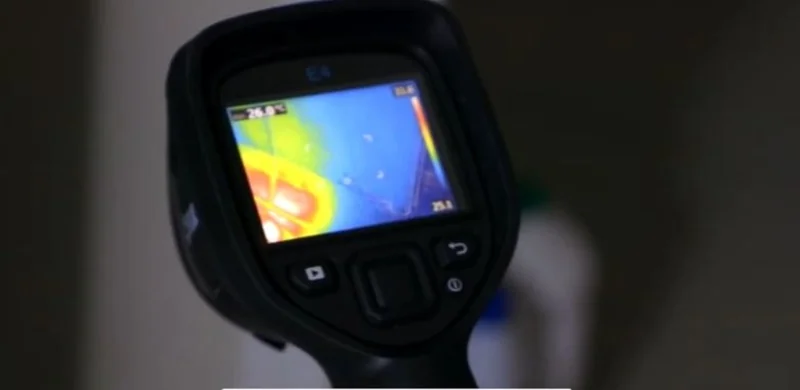
| Thermal imaging | Temperature differences that can point to wet or cold spots behind finishes | Shows temperature, not mold; always confirmed with a moisture meter |
| Air sample (spore trap) | A snapshot of airborne spores, usually compared with an outdoor sample taken the same time | Results swing with weather, door traffic and the HVAC; one sample isn’t a verdict |
| Surface swab or tape lift | What is growing on a specific spot, identified under a microscope | Tells you about that spot only, and says nothing about health |
| Bulk sample | A piece of drywall, insulation or dust sent to the lab | Tells you the material has mold, which you usually already know |
| Home test kit (settle plate) | A dish that grows whatever lands on it | Spores are everywhere, so it almost always grows something; not reliable |
Lab methods should follow guidance from professional bodies such as AIHA or ACGIH, according to the EPA. Prices from Angi (2026); more in mold testing cost.
Quick answer: What does a thermal camera do on a mold inspection?
It finds temperature differences on a surface. A cold patch on a wall can mean moisture, missing insulation or an air leak, so we confirm with a moisture meter before drawing any conclusion. It helps us decide where to open a wall, which means fewer holes.
Our Inspection
What Happens During a Mold Inspection, Step by Step?
Most inspections take an afternoon. Here is the order we work in, and what you walk away with.

A Phone Call About the History
You tell us what you saw, smelled and when. Past leaks, flooding, a new roof or a basement that sweats in July all point us in a direction.
Why it matters: The history usually narrows down the source before we arrive.
A Walk Through the House
We check the basement or crawl space, the attic, bathrooms, the kitchen sink base, windows and any room with a smell. We look for staining, swelling, efflorescence and rust.
Why it matters: Mold hides. The surroundings tell us where to look.
Moisture Readings and Thermal Images
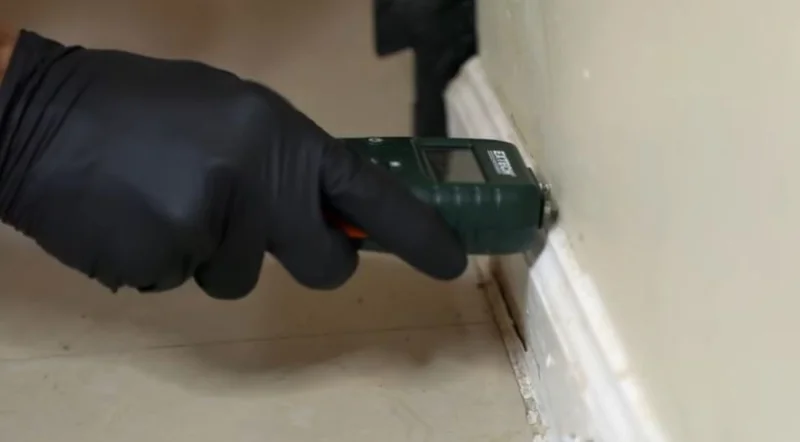
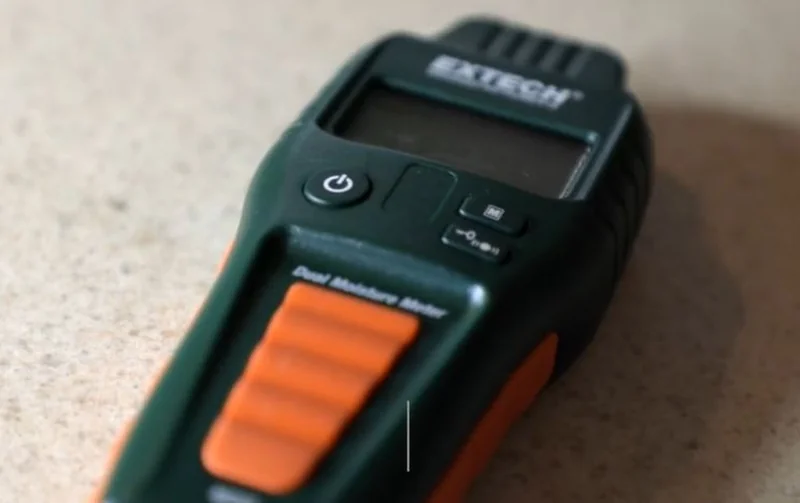
Pin and pinless moisture meters, a thermo-hygrometer and a thermal camera. Readings are logged by location so we can show you where the water is.
Why it matters: A map of moisture is what a repair plan needs.
Tracing the Source
Plumbing, grading, gutters, roof, ventilation or condensation. Mold is the symptom. Water is the cause.
Why it matters: Skip the source, and the mold returns.
Written Findings
Photos, readings, a plain-language summary and a written scope and price if remediation is needed. We tell you if lab testing would help or not.
Why it matters: You decide with facts in hand, not pressure.
Next Steps
That might be a DIY fix, a repair by a plumber or roofer, monitoring, remediation or an independent lab test. We tell you which.
Why it matters: The goal is the smallest job that actually solves it.
Why Independent
Why Do We Recommend Someone Else Do the Lab Work?
Because the company that removes the mold shouldn’t grade its own work. It is a simple conflict-of-interest rule, and it protects you.
Fair Results
An independent tester has no reason to pass or fail a job. If the area is clean, the report says so, and it carries weight with insurers, buyers and landlords.
Right Questions, Right Sample
Sampling protocols and interpretation are specialist work, and the EPA says to use professionals with experience in designing them. We stay in our lane and hand off.
Everything Documented
We give the tester our scope, moisture readings and photos so the report fits the job. You get both documents.
Independent testers are priced by the tester, not by us (see independent mold testing). We’ll tell you when testing is worth it and when it isn’t. More on how the finish line works: our mold remediation process.
Local Conditions
What Do We Look for in Sioux Center and Sioux County Homes?
Our inspections follow the weather and the housing stock. These are the places we check first, and why.
Basements After Wet Springs
Sioux Center averages about 34.8 inches of snow a year, with May and June the wettest months at 4.2 and 4.5 inches (NOAA normals). Snowmelt and spring rain push water against block and poured walls.
Corn-Sweat Summers
Dew points in the 70s in July and August make cool basements sweat. No leak, still damp, and cardboard and drywall absorb it.
Attic Frost and Ice Dams
January lows near 9°F, with a record of −37°F. Warm household air rising into a cold attic freezes on the sheathing and melts back in spring.
June 2024 Flood Homes
The June 20–22, 2024 flood put the Rock River at 27.7 feet at Rock Valley and reached roughly 500 homes. Wall cavities that stayed wet can still hold growth.
Storm-Damaged Roofs
Wind and hail in 2025 and 2026, including the June 29–30 and September 1, 2026 storms, opened roofs and left slow leaks above ceilings.
Older and Tighter Houses
About 13% of Sioux Center homes predate 1950, and the median home dates to 1979. A third have been built since 2000, and tight houses hold humidity unless they’re ventilated.
Know your signs first: signs of mold in the house.
Reading Results
How Do You Read a Mold Test Report?
A lab report can look authoritative and still tell you very little. Here is how to read it without getting scared or falsely reassured.
There Is No Pass/Fail Number
Neither the EPA nor any federal agency has set limits for airborne mold, so a spore count has no official line to be measured against. Good reports compare inside samples with an outdoor sample from the same time.
Identifying the Species Rarely Changes the Cleanup
The CDC says you don’t need to identify the mold to clean it up. Whether the report says Aspergillus, Penicillium or Cladosporium, damp materials with growth get cleaned or removed the same way. See common indoor molds for what those names mean.
Conditions 1, 2 and 3
ANSI/IICRC S520 describes Condition 1 as normal fungal ecology, Condition 2 as settled or airborne spores and fragments that came from a growth area, and Condition 3 as actual mold growth. A post-remediation test is checking for Condition 1.
One Sample Is a Snapshot
Air counts change with the weather, the HVAC, the time of day and how many doors were opened. Be wary of any test that turns one reading into a diagnosis.
Quick answer: What does a high spore count mean?
On its own, not much. It means that sample had more spores than the comparison sample. It doesn’t tell you whether anyone will get sick, and it doesn’t replace finding the moisture. A good tester explains what the numbers suggest and what they don’t.
Before You Pay
What Can You Check Yourself Before Paying for an Inspection or Test?
A little looking costs nothing and sometimes answers the question. Here is what to do, and what to skip.
Worth Doing First
- Look under sinks, behind toilets and around the water heater for stains and drips
- Check the basement walls and floor after a heavy rain
- Look at attic sheathing and nails for frost or dark staining in winter
- Buy a $10–$50 hygrometer and keep indoor humidity under 60% (EPA), ideally 30–50%
- Photograph anything suspicious with the date
Skip These
- Settle-plate or dish test kits; they grow something almost every time
- Bleach on porous materials; the EPA doesn’t recommend routine bleach for mold
- Painting over spots with a mold blocker before finding the leak
- Opening walls in a house with an asthma sufferer; call first
- Paying for a lab test when mold is already visible
Not sure what you’re looking at? Call and describe it. We’ll tell you honestly if it needs a visit.
FAQ
Mold Inspection and Testing in Sioux Center: Frequently Asked Questions
Straight answers to what people ask us before they book.
How much does a mold inspection cost in Sioux Center?
It depends on the size of the home and what we’re asked to check, so we quote it in writing before we start. For reference, Angi (2026) puts basic air sampling at about $250–$350 and swab testing at about $200–$300, and those lab fees are separate from an inspection.
Is a mold inspection the same as a home inspection?
No. A general home inspector checks the whole house and may flag visible mold or moisture, but a mold inspection is a focused look at moisture, growth and source. If a home inspector writes “possible mold,” a mold inspection is the logical follow-up.
How long does an inspection take?
A typical house takes a couple of hours on site, longer for large homes with finished basements or crawl spaces. You get written findings afterwards.
Do you take lab samples?
We inspect and map moisture on every job. When lab testing is useful, we recommend an independent tester so the same company isn’t sampling and grading its own work.
Can mold be in my house if I don’t see it?
Yes. It grows behind drywall, under flooring, inside wall cavities and on the back of cabinets. A musty smell, a stain that keeps coming back, bubbling paint and soft floors are common clues. See signs of mold.
Will a test tell me what kind of mold I have?
A surface or bulk sample can name what is growing at that spot. The CDC says you don’t need to know the type to clean it up, and it doesn’t change the approach.
Should I test after I clean it myself?
If the area was small and hard-surfaced, your eyes and nose plus a dry reading are usually enough. If you want proof for a buyer, landlord or insurer, hire an independent tester.
What is post-remediation verification?
A visual check and, if wanted, independent sampling after the work to confirm the area is back to normal conditions before it’s rebuilt. ANSI/IICRC S520 (2024) describes it.
Do you handle mold inspection outside Sioux Center?
Yes. Same-day response in Sioux Center (51250), Orange City (51041), Hull (51239), Rock Valley (51247), Sheldon (51201), Le Mars (51031) and the towns around them. Call anytime, 24/7, and we’ll tell you honestly when we can be there.
Will insurance cover it?
Often only when the damage came from a sudden, covered event like a burst pipe or storm damage. Long-term seepage, humidity and flooding are usually excluded, and sump or sewer backup needs a water-backup endorsement. We give you dated photos, moisture readings and a written scope for your adjuster either way.
Book an Inspection
Need a Mold Inspection? Call Us Today
Tell us what you’ve seen and smelled. We’ll set up a same-day inspection in Sioux Center and nearby towns, give you written findings and tell you honestly whether testing is worth it.
Siouxland Mold Solutions
- Office529 4th St NW, Sioux Center, IA 51250
- Phone(712) 569-1887
- EmailContact@moldremovalsiouxcenter.com
- HoursCall anytime, 24/7, including emergencies
- ResponseSame-day across Sioux Center and our service area