

Mold Problems · Sioux Center, IA
Mold Problems in Sioux Center, IA Homes
Basement walls that sweat, attic sheathing with frost, black spots on a bathroom ceiling, a musty smell you can’t place. Siouxland Mold Solutions finds the moisture behind each of these, removes the mold and fixes the cause. Same-day response, calls answered 24/7.
This page is the map: where mold shows up in northwest Iowa homes, what usually causes it, what you can handle yourself and when to pick up the phone.

The Short Version
What Counts as a Mold Problem, and Where Does It Start?
A mold problem is any place where moisture lasts long enough for mold to grow, usually more than 24 to 48 hours on a porous material. It starts with water, not dirt: a leak, a flood, condensation, high humidity or a roof that let rain in. Fix the water and the mold stops growing. Leave the water and no cleaner on earth will keep it away.
The EPA puts it this way: the key to mold control is moisture control. If a wet area is dried within 24 to 48 hours, mold usually can’t take hold. That is why speed matters after a pipe bursts, why a slow drip under the sink is worse than it looks, and why a damp basement can quietly grow mold on stored boxes without ever flooding.
In Sioux Center the usual sources are spring seepage and sump failures, summer humidity, winter condensation and attic frost, old plumbing, hail and wind damage, and the lingering effects of the June 2024 flood. Below we sort the common problems by where they appear and tell you what to do about each. If you are still working out whether you have mold at all, start with signs of mold.
Quick answer: How fast does mold grow after water damage?
Mold can start growing within 24 to 48 hours on wet porous materials, according to the EPA. Drying everything quickly, with air movement and a dehumidifier, is the best way to stop it. Anything that stays wet for days is a candidate for removal.
Where It Shows Up
Where Do Mold Problems Show Up Most in Northwest Iowa Homes?
These are the places we are called to most, in rough order. Each has its own causes and its own fix.
Basements
Block and poured walls, sump pits, floor drains and stored boxes. Spring snowmelt and July humidity both feed it.
Attics
Frost on roof sheathing in winter, bath fans dumping into the attic and roof leaks after hail.
Crawl Spaces
Dirt floors, vents that let in damp summer air and plumbing leaks nobody sees.
Bathrooms
Grout, caulk, ceilings and behind tile. Weak fans and long hot showers do most of the damage.
Kitchen Sink Bases and Appliances
Slow leaks at supply lines, traps, dishwashers and ice-maker lines. Particleboard cabinets swell and grow mold.
HVAC and Ducts
Evaporator coils, drain pans and ductwork. Condensation forms on cool surfaces when the AC runs.
After a flood or sewer backup the job is different: see flood mold cleanup.
Symptoms and Causes
What Are the Most Common Mold Problems, and What Usually Causes Each One?
You rarely see “mold” first. You see a symptom. This is how we read the symptoms.
| What you notice | Usual cause | First move |
|---|---|---|
| Musty smell in the basement or a closet | Humidity, damp block walls, wet cardboard, a hidden leak | Check humidity with a hygrometer, look behind stored items, find the source |
| Black or gray spots on the bathroom ceiling | Steam with weak ventilation, a fan venting into the attic | Check the fan’s duct and airflow; clean small spots; fix venting |
| Bubbling or peeling paint | Moisture behind the paint, from a leak, wicking or condensation | Find the water; do not paint over it |
| Water stain on the ceiling | Roof leak, plumbing above, or condensation | Trace it above; if it is wet or soft, call before it spreads |
| Soft floors or warped baseboards | Water under or behind them for some time | Moisture-check; expect to open and dry the area |
| Window sills wet or moldy | Indoor humidity too high for the outdoor temperature | Lower humidity; ventilate; wipe and dry hard surfaces |
| Frost and dark staining in the attic | Warm moist air leaking from living space | Seal air leaks, fix bath fan and dryer vents, then clean the sheathing |
| Mold that keeps coming back | The source was never fixed | Stop cleaning; start tracing the water |
Matching symptom pages are being added across the site, so the fix for each gets its own full guide.
What Happens If You Wait
What Happens If You Ignore a Mold Problem?
Mold doesn’t fix itself, and the longer the water stays, the bigger and costlier it gets.
It Spreads Into Materials
Growth that starts on the surface of drywall works into the paper and the gypsum, and into insulation and wood framing. Porous materials with growth generally can’t be cleaned reliably.
The Structure Takes the Hit
Long-term moisture swells particleboard, softens subfloor and can lead to rot in framing. The repair grows from a cleanup to a rebuild.
Indoor Air Gets Worse
Mold releases spores and fragments, and growth can leave a persistent musty smell through the house, especially when the HVAC runs.
Health Complaints Can Follow
The CDC says mold can cause stuffy nose, wheeze, burning eyes and skin rash, and more serious reactions in people with asthma, allergies or weakened immune systems.
Insurance Gets Harder
Sudden, accidental damage is often covered. Long-term seepage and neglect are commonly excluded, and delay can turn a covered event into an uncovered one.
Resale Gets Harder
Buyers and lenders ask about moisture and mold. An unfixed problem shows up in inspections.
Sources: CDC, Mold and your health.
DIY or Professional?
Which Mold Problems Can You Handle Yourself?
Plenty of small problems you can handle. Here is the line we draw, and it follows EPA guidance.
Reasonable to Handle Yourself
- Under about 10 square feet of mold (EPA)
- On a hard surface like tile, glass, metal or sealed wood
- From a source you have already found and fixed
- No one in the home has asthma, severe allergies or a weakened immune system
- You wear an N95, gloves and goggles and clean with detergent and water
Call Before You Touch It
- More than about 10 square feet, or hidden behind walls, floors or ceilings
- Water was from a sewer backup or floodwater
- It is in or near the HVAC system or ductwork
- Drywall, insulation, carpet or ceiling tile has mold in it
- Mold keeps coming back after you have cleaned it
- Someone in the home has asthma, a lung condition or a weakened immune system
Quick answer: Is bleach a good way to kill mold?
Not as a routine step. The EPA doesn’t recommend bleach for mold cleanup, and it doesn’t reach growth inside porous materials. Detergent and water, thorough drying and removal of damaged materials work better. Never mix bleach with ammonia.
Sources: EPA, A Brief Guide to Mold, Moisture and Your Home.
Act Quickly
When Should You Call Right Away?
Most mold problems are not emergencies, but a few are. These are the ones where waiting makes it worse.
Active Water
A burst pipe, a sump failure, a roof leak or water coming through a wall. Every hour on porous materials counts, so call while you’re shutting the water off.
Sewage or Floodwater
That is Category 3 water under IICRC S500. Don’t clean it yourself, and don’t run fans that spread it.
Health Concerns at Home
If someone has asthma or a weakened immune system and you find mold, keep them away from the area and call before you disturb it.
We answer the phone any time, day or night, and give same-day response. If the problem is water, see flood and water damage mold cleanup.
Local Factors
Why Do Sioux Center Homes Get Mold?
Weather, soil and the age of the house set the odds. This is the local picture.
Wet Springs
May and June average 4.2 and 4.5 inches of rain (NOAA normals). With about 34.8 inches of snow a year, melt and rain push water against foundations.
Humid Summers
Corn sweat pushes July and August dew points into the 70s. Cool basements and crawl spaces sweat.
Cold Winters
Lows near 9°F in January, with a record of −37°F. Warm indoor air condenses on cold windows, walls and attic sheathing.
The June 2024 Flood
Floodwater on June 20–22, 2024 reached roughly 500 homes in Rock Valley alone, and the Rock River hit 27.7 feet there. Cavities that stayed damp can still hold growth.
Hail and Wind
The June 29–30 and September 1, 2026 storms followed damaging wind in 2025. Roofs, siding and flashing leaks show up as ceiling stains months later.
Housing Mix
About 13% of Sioux Center homes predate 1950, with a median build year of 1979, and a third were built since 2000. Old foundations leak. Tight new houses hold humidity.
First 48 Hours
What Should You Do in the First 48 Hours After You Find Moisture or Mold?
Speed and sequence matter. This is what we tell people on the phone.

Stop the Water
Shut off the supply, turn off the sump if it’s failing and stop any active leak. If water may touch electrical, shut off power at the panel only if it’s safe to reach.
Why it matters: Mold follows water. No water, no growth.
Photograph Everything
Date-stamped photos of the damage and of your belongings before you move anything. Your insurer will want them.
Why it matters: Documentation protects a claim.
Get Air Moving and Remove Wet Items
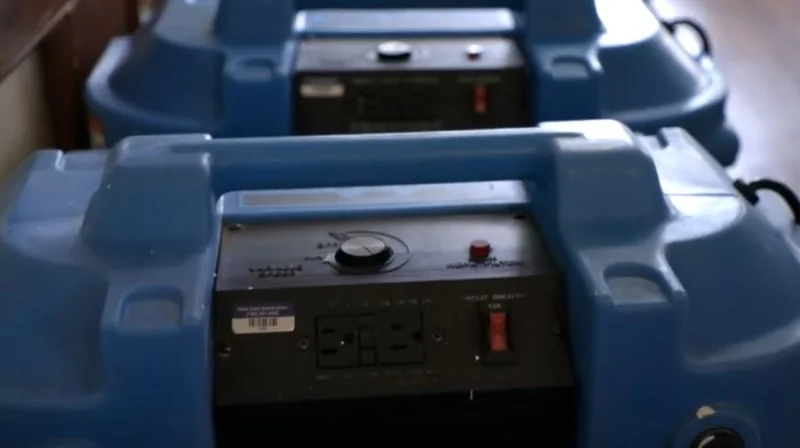
Open windows if the weather allows, run fans and a dehumidifier, and pull wet rugs, boxes and cushions out of the room.
Why it matters: Dry within 24–48 hours and mold usually can’t take hold (EPA).
Don’t Disturb Mold Dry
Don’t scrub, sand or use a fan on visible growth. That throws spores around. Wear an N95 if you must be in the room.
Why it matters: Disturbed mold spreads.
Call for a Moisture Inspection
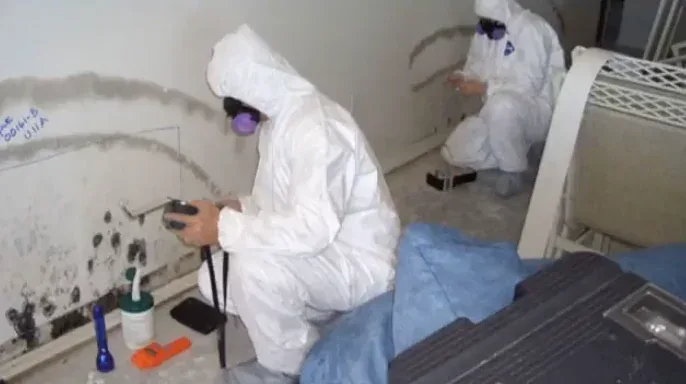
Moisture readings and thermal images show how far the water went, including behind walls. You get a written scope and price.
Why it matters: Hidden wet spots are the ones that grow mold.
Fix the Cause
A plumber, a roofer, a grading fix or a better fan. A clean surface in a damp house grows mold again.
Why it matters: Prevention is the cheapest job.
Mold on the cleanup side? We do containment, removal, HEPA cleaning, drying and verification, with a written scope first.
Prevention
How Do You Keep Mold Problems From Starting?
Prevention in this climate comes down to six habits.
Watch Humidity
Keep it under 60%, ideally 30–50% (EPA). A hygrometer costs $10–$50.
Fix Leaks Fast
A drip under the sink or a stained ceiling gets attention this week, not this season.
Test the Sump
Pour a bucket into the pit before spring and check the float, the check valve and the discharge line.
Move Water Away
Clean gutters, extend downspouts and keep soil sloped away from the foundation.
Run the Fans
Bath fans during and for 20 minutes after a shower, kitchen hood when cooking, and the dryer vented outside.
Check After Storms
Basement, attic and closets after any hard rain or hail. Early is cheap.
Found moisture, a stain or a smell? Call now and we’ll tell you what it is and what it needs.
FAQ
Mold Problems in Sioux Center: Frequently Asked Questions
Straight answers to the questions we hear most.
What is the most common cause of mold in a house?
Moisture from leaks, flooding, condensation or high humidity. The EPA is blunt about it: mold control is moisture control.
Can mold grow in winter in Iowa?
Yes. Cold weather slows growth outdoors, but inside it grows wherever there is moisture, such as on cold windows, exterior walls and attic sheathing where warm air condenses.
How do I know if the mold is serious?
Size, location and the type of material matter more than color. More than about 10 square feet, mold in drywall or insulation, or mold in or near the HVAC system calls for a professional.
Is mold always visible?
No. It grows behind drywall, under flooring and inside wall cavities. A musty smell, stains and bubbling paint are the usual clues. See signs of mold.
Does insulation or drywall with mold have to be replaced?
Usually, yes. Porous materials with actual growth generally can’t be cleaned reliably, and they’re removed under ANSI/IICRC S520 practice.
What if the mold comes back after I cleaned it?
Then the moisture source is still there. Stop cleaning and find the water first. Persistent humidity, a hidden leak or condensation are the usual suspects.
Should I leave the house if I find mold?
Not necessarily. Small isolated spots don’t require it. If someone has asthma, a lung condition or a weakened immune system, or the problem is large, they should stay away from the area and you should call before disturbing it.
Do you handle mold problems outside Sioux Center?
Yes. Same-day response in Sioux Center (51250), Orange City (51041), Hull (51239), Rock Valley (51247), Sheldon (51201), Le Mars (51031) and the towns around them. Call anytime, 24/7, and we’ll tell you honestly when we can be there.
Will insurance cover it?
Often only when the damage came from a sudden, covered event like a burst pipe or storm damage. Long-term seepage, humidity and flooding are usually excluded, and sump or sewer backup needs a water-backup endorsement. We give you dated photos, moisture readings and a written scope for your adjuster either way.
Get Help Today
Have a Mold Problem? Call Us Today
Tell us what you’re seeing and where. We’ll give you a straight answer, set up a same-day moisture inspection if it needs one and put the scope and price in writing before any work starts.
Siouxland Mold Solutions
- Office529 4th St NW, Sioux Center, IA 51250
- Phone(712) 569-1887
- EmailContact@moldremovalsiouxcenter.com
- HoursCall anytime, 24/7, including emergencies
- ResponseSame-day across Sioux Center and our service area