

About Us · Sioux Center, Iowa
About Siouxland Mold Solutions: Mold Removal & Water Damage Restoration in Sioux Center, IA
We’re a mold removal, mold remediation and water damage restoration company based at 529 4th St NW in Sioux Center. We know how our springs, our humid Augusts and our subzero Januarys show up in local basements and attics, and we built our whole approach around one idea: find the water, remove the mold properly, dry it out, fix the cause and put it all in writing.
If you’re smelling it, seeing it or standing in water, you can call us anytime, day or night.
Who We Are
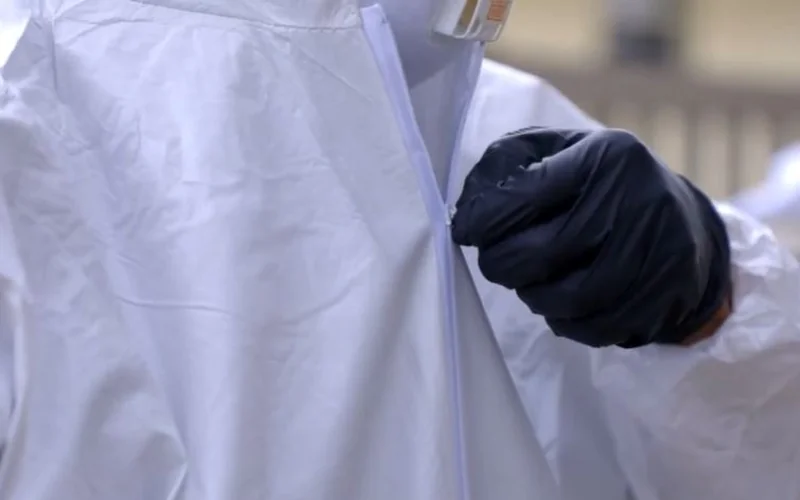
Who Is Siouxland Mold Solutions?
Siouxland Mold Solutions is a Sioux Center, Iowa company that does complete mold removal, mold remediation and water damage restoration, plus mold inspection and moisture control, for homes, rentals and small businesses across Sioux, Lyon, Plymouth, O’Brien and Osceola counties. Our office is at 529 4th St NW, Sioux Center, IA 51250. Calls are answered 24/7 at (712) 569-1887, and we offer same-day response across our service area.
Mold is almost always a water problem first. So we don’t start with the stain you can see. We start by tracing where the moisture is coming from, whether that’s a sump that quit during a June storm, a bathroom fan venting into the attic, or a block wall that seeps every time the snow melts. Then we remove the damage the right way and make sure it doesn’t come back.
We keep our focus narrow on purpose. Mold removal, mold remediation and water damage restoration are what we do, from the first call to the finished repair. You won’t get a sales pitch for services you didn’t call about, and if a spot is small enough to clean yourself, we’ll tell you that too.
What We Do, in Plain Terms
- Mold removal and mold remediation in basements, attics, crawl spaces, bathrooms, kitchens and HVAC systems
- Water damage restoration from start to finish: emergency water extraction, removal of wet materials, structural drying, sewage and floodwater cleanup, and putting walls and floors back after sump failures, burst pipes, storm flooding and sewer backups
- Mold inspection and moisture mapping with moisture meters and thermal imaging
- Moisture fixes such as dehumidifiers, crawl space vapor barriers and ventilation corrections so the mold stays gone
Why We Exist
Why Build a Mold Company Just for Sioux County?
Search “mold removal near me” from Sioux Center and a lot of what comes back is either a restoration company in Sioux City, 40-plus miles away, or a national website that passes your details to whichever contractor buys the lead. Neither one knows that Sioux Center doesn’t allow sump pumps on the sanitary sewer, or that the basement you’re standing in may have taken water in June 2024.
What Homeowners Here Keep Running Into
- “Same-day” that turns into “sometime this week” once the drive from Sioux City is factored in
- Prices quoted over the phone for work nobody has looked at
- Spray-only or fogging “treatments” that leave moldy drywall inside the wall
- “Toxic black mold” scare talk and pressure to sign the same day
- The same company testing, removing and then passing its own work
- Nobody fixing the reason the mold grew, so it’s back by next spring
What We Do Instead
We show up the same day, find the source, put the scope and price in writing before anything starts, remove what’s actually damaged, dry it to normal readings and fix the cause. If you want proof the job is done, we point you to an independent tester so the result carries weight with you, your insurer or a future buyer. Local vs. national mold companies.
Quick answer: Why hire a local mold company instead of one from Sioux City?
A local team can usually see the problem the same day, already knows how Sioux County basements, attics and weather cause mold, and is close by if something needs a second look next spring. Less windshield time also means scheduling around your day is easier.
Local Knowledge
How Do Sioux Center’s Weather and Homes Shape Our Work?
Mold in northwest Iowa isn’t random. It follows the seasons, the rivers and the age of the house. These are the local conditions we plan every job around.
Snowmelt and Sump Season (March–April)
Sioux Center averages about 34.8 inches of snow a year (NOAA 1991–2020 normals). When it melts, the ground stays saturated, sump pumps run nonstop and older block basement walls start to seep. The City of Sioux Center doesn’t allow sumps to discharge into the sanitary sewer, so yours should go to the yard or storm system.
The Wettest Months (May–June)
June (about 4.5 inches) and May (about 4.2 inches) are the wettest months here, out of roughly 29.9 inches of precipitation a year (NOAA). Severe storms, power outages that stop sump pumps and floor-drain backups all peak in this window.
Corn Sweat Summers (July–August)
Iowa’s cornfields release huge amounts of water vapor in midsummer, pushing dew points into the 70s. That humid air condenses on cool basement concrete, which is why basements that never flood still smell musty in August.
Subzero Winters (December–February)
Sioux Center’s record low is −37°F, and average January lows sit around 9°F. Warm, moist air leaking into a cold attic freezes on nails and roof sheathing, then soaks the wood when it thaws. Bathroom fans venting into the attic are a common cause.
The June 2024 Flood
Rain from June 20 to 22, 2024 sent the Rock, Floyd and Big Sioux rivers to record levels (NWS Sioux Falls). The Rock River crested at 27.7 feet in Rock Valley, 5 feet above its old record, and about 500 homes there were damaged (USGS). Six homes at Hymans’ Pit south of Sioux Center took water to the top of their walkout basements.
2026 Storms and Slow Leaks
Storms on June 29–30, 2026 brought gusts near 60 mph and hail to Sioux Center. On September 1, 2026, baseball-size hail fell near Orange City and 70–80+ mph gusts hit Hull (NWS Sioux Falls). Hail-damaged roofs, siding and windows can leak slowly for months before a stain shows.
The Homes We Work In
About 13% of Sioux Center homes were built before 1950, the median home was built in 1979, and about a third have gone up since 2000. The town is young, too: the median age is about 30, and close to 4 in 10 households have kids. Each type of house gets mold for different reasons.
- Older homes near downtown: block or stone foundations, older drain tile and settled grading that lead to seepage and damp walls
- 1970s–1990s ranches: finished basements with paneling or drywall over concrete and carpet laid on the slab, where water gets trapped
- Newer additions like Windsong, Meadow Creek, Highland Hills, South Ridge Estates, Country View North and Harvest Heights: tight, energy-efficient homes that hold in shower and cooking moisture
- Rentals near Dordt University and the apartments on 11th Ave. NE: busy bathrooms, laundry dried indoors and fans that don’t get used
- Acreages and farmhouses outside town: older crawl spaces with bare soil, and wells that Iowa State University Extension advises testing after flooding
How your home’s age changes mold risk · Why Sioux Center homes get mold
Quick answer: Why do Sioux Center basements smell musty in August?
Summer “corn sweat” pushes dew points into the 70s, and that moist air condenses on cool basement walls and floors. Keeping basement humidity under 60% with a dehumidifier usually stops the smell. If it doesn’t, there may be hidden water damage behind a wall or under carpet.
What We Stand For
Our Promises on Every Mold Removal Job
Iowa doesn’t license mold remediation, so anyone can call themselves a mold expert. These are the rules we hold ourselves to instead.
We Find the Water First
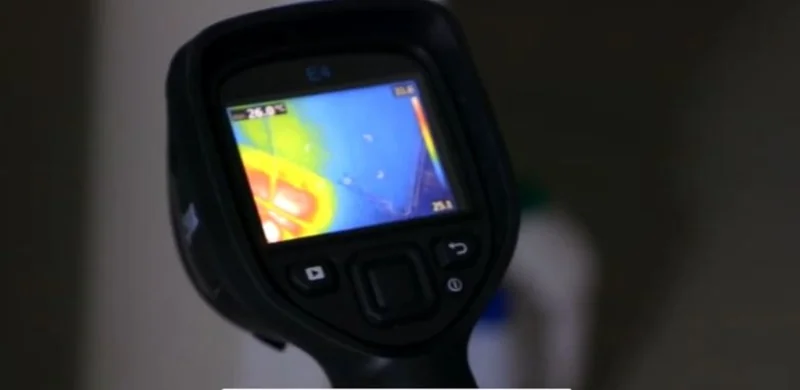
Every job starts with moisture meters and a thermal camera, not a sprayer. Removing mold without fixing the leak just means paying twice.
We Remove Mold, Not Just the Stain
Moldy drywall, carpet pad and insulation come out. The EPA doesn’t recommend bleach as a routine part of mold cleanup, and we don’t sell fogging as a fix.
You Get Everything in Writing
A written scope and price before work starts, then dated photos and moisture readings when it’s done, ready for you, your adjuster or a buyer.
We Don’t Grade Our Own Work
If you want lab clearance testing, we recommend an independent tester, so the company doing the work isn’t the one signing off on it.
We’re Honest About Small Jobs
A patch under about 10 square feet on a hard surface is often a DIY job (EPA). We’ll tell you how to handle it safely instead of booking a crew.
Calm Facts, Not Scare Talk
The CDC says a mold’s color doesn’t tell you how harmful it is. We explain what we find plainly, and we leave health questions to your doctor.
Standards & Methods
What Standards Do We Follow for Mold Remediation?
We follow ANSI/IICRC S520, the industry standard of care for professional mold remediation (4th edition, 2024), and IICRC S500 for water damage restoration. For homeowner safety advice we lean on the EPA’s guide to mold and moisture and the CDC’s mold and health guidance, and for flood recovery we follow Iowa State University Extension’s advice.
The core idea behind S520 is simple: physically remove the mold and correct the moisture. Not cover it, not mask the smell.
What That Looks Like Inside Your Home
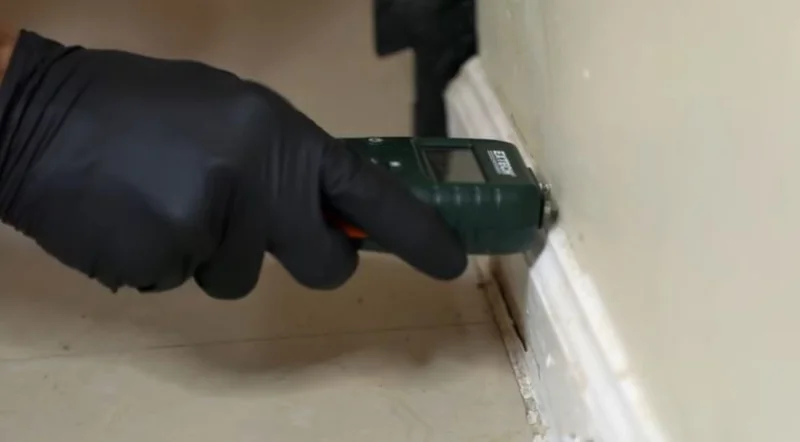
- Moisture mapping with pin and pinless meters, hygrometers and thermal imaging to find every wet area and trace it to the source
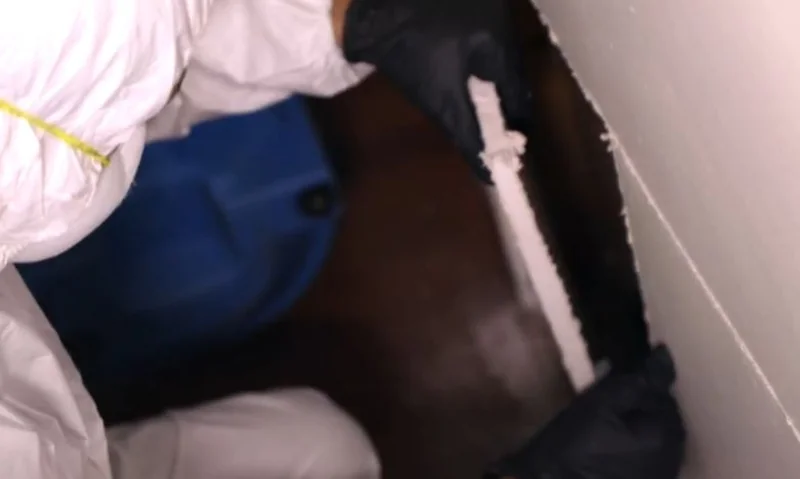
- Containment with plastic sheeting and HEPA air scrubbers under negative pressure, so spores get pulled out of the house, not into the rest of it
- HVAC shut off or sealed during the work so the ducts don’t spread spores
- Removal of damaged porous materials like drywall, carpet pad and insulation, bagged inside the containment
- HEPA vacuuming and damp wiping of framing and concrete, with sanding or blasting for heavily affected wood
- Drying to normal readings with dehumidifiers and air movers before anything is closed up
- Dated before-and-after photos and moisture readings you can keep
How containment and negative air work · Post-remediation verification
Credentials Worth Asking About
IICRC certifications such as Applied Microbial Remediation Technician (AMRT) and Water Restoration Technician (WRT) are the main industry credentials for this work. In Iowa, contractors earning $2,000 or more a year from construction must also register with the Iowa Department of Inspections, Appeals, and Licensing (DIAL).
Quick answer: Do you need a license to remove mold in Iowa?
No. Iowa doesn’t license mold remediation. Contractors earning $2,000 or more a year from construction must register with Iowa DIAL, and IICRC certification is the main industry credential to ask for. Mold certifications explained.
What to Expect
What Happens When You Call Us?
No call center script and no pressure. Here’s how a typical job goes, from the first call to the final photos.
You Call, Day or Night
Calls are answered 24/7. We’ll ask what you’re seeing, where it is, how long it’s been there, whether the water was clean or from a drain or flood, and whether anyone at home has asthma or other health concerns.
Same-Day Visit and Moisture Mapping
We come out the same day in most of our service area, find every wet spot with meters and thermal imaging, and trace it back to the source.
A Written Scope Before Any Work
You get a written plan with photos: what comes out, how the area is contained, how long it should take and what it costs. Nothing starts until you’ve read it.
Containment, Removal and Drying
We seal the area, remove what can’t be cleaned, HEPA-clean what can, and dry the structure back to normal readings.
Proof, and the Cause Fixed
You get dated before-and-after photos and readings. Then the leak, drainage, ventilation or humidity problem gets fixed, and we’ll tell you plainly if part of that needs a plumber, roofer or waterproofing contractor.
Quick answer: How long does mold remediation take?
A small, contained job is often done in a day or two. A full basement with drying and clearance testing can take a week or more before rebuilding starts. Remediation timelines.
Quick answer: Can we stay home during the work?
Usually, yes. The work area is sealed and kept under negative air pressure. For large jobs, sewage cleanup, or if someone at home has asthma or a weakened immune system, staying elsewhere can be the better call. Staying home during remediation.
Our Services
Mold Removal, Mold Remediation and Water Damage Restoration in Sioux Center
We handle the whole problem, not just one piece of it: the water that got in, the mold it caused and the repairs after. One company, one written scope, one crew that knows what the last step found.
Mold Removal
Physically taking out moldy drywall, carpet pad, insulation and other materials that can’t be cleaned, and HEPA-cleaning what stays.
Mold Remediation
The complete job: containment, removal, cleaning, drying, verification and fixing the moisture so the mold doesn’t come back.
Water Damage Restoration
Start to finish: emergency water extraction, structural drying, sewage and floodwater cleanup, and putting walls and floors back.
Mold Removal and Remediation Services
Basement Mold Removal
Seepage, sump failures and summer humidity. Where most Sioux Center mold jobs happen.
Attic Mold Removal
Frost on nails, dark sheathing and fans venting into the attic.
Crawl Space Mold & Encapsulation
Bare-dirt crawl spaces in older homes and farmhouses.
Bathroom & Kitchen Mold
Mold behind tile, under sinks and behind dishwashers.
HVAC & Air Duct Mold
Musty AC smell, wet drain pans and dirty coils.
Mold Inspection & Testing
Moisture mapping and honest advice on when testing is worth it.
Water Damage Restoration Services
Flooded Basement Cleanup
Sump failures, seepage and storm water on the basement floor.
Burst & Frozen Pipe Damage
January pipe breaks, fast shut-off advice and full drying.
Storm & Hail Water Damage
Roof, siding and window leaks after hail and high winds.
Sewage Backup Cleanup
Category 3 floor-drain backups, cleaned and sanitized.
Mold After Flooding
Checking and treating wall cavities that stayed wet after a flood.
Commercial Water & Mold Work
Churches, daycares, offices and shops, scheduled around your hours.
See all mold and water damage services · Mold remediation cost · Water damage restoration cost
Who We Help
Who Do We Help Around Sioux Center?
About three in four Sioux Center homes are owner-occupied, but rentals, farm homes and small businesses call us just as often.
Families and Homeowners
Parents worried about a musty basement or a bathroom that won’t stay clean. We explain what we find calmly and keep the work area sealed off from the rest of the house.
Landlords and Property Managers
Iowa Code 562A.15 requires landlords to keep rentals fit and in repair. We provide fast, documented work that fits around tenants and turnovers.
Renters and Dordt Students
If you rent near Dordt University or anywhere in town, we can help you understand what you’re seeing and how to document it for your landlord.
Buyers, Sellers and Agents
Iowa Code 558A requires sellers to disclose known problems. We give both sides a clear written scope and work around closing dates.
Acreage and Farmhouse Owners
Stone foundations, bare-dirt crawl spaces and private wells. We serve rural routes between towns, so just give us your address.
Churches, Daycares and Businesses
Work scheduled around services, class time and business hours, with containment that keeps the rest of the building open.
See everyone we help · For real estate agents · Selling a house with mold in Iowa
Service Area
Where Do We Work? Sioux Center and 35 Nearby Towns
Sioux Center sits on U.S. Highway 75 in the middle of Sioux County, so most of the towns we serve are a short drive away. Whether you live near Dordt University, the All Seasons Center or Sioux Center Health, in Orange City near Northwestern College, or on an acreage between towns, same-day response is the norm, not a stretch. Distances below are straight-line miles from our office.
Sioux County
Home base. Orange City is the county seat.
Lyon County
Rock River and Little Rock River valleys.
Plymouth County
Le Mars is the largest city we serve.
O’Brien County
The Floyd River crested above its record in 2024.
Rural Routes and Acreages
We also serve farm homes and acreages between towns. If you’re on a rural route, just give us your address when you call.
Hire Smart
How to Check Any Mold Company, Including Us
Because Iowa has no mold license, the questions you ask matter more than the logo on the truck. We’d rather you ask them.
Questions Worth Asking
- Are you registered with Iowa DIAL? You can look any contractor up on the DIAL website.
- Who on the crew holds IICRC certifications, such as AMRT or WRT?
- Can you send a certificate of liability insurance?
- Will I get a written scope with containment, removal and drying spelled out?
- How will you verify the job is done, and can I use an independent tester?
- What does your warranty cover, and what happens if the moisture source isn’t fixed?
Red Flags to Walk Away From
- “Toxic black mold” scare talk and pressure to sign today
- Spray-only, fogging or ozone jobs with no material removal
- A firm price before anyone has seen the problem
- The same company testing, fixing and clearing its own work, with no independent option
- Large cash deposits up front
Quick answer: Will you tell me if I can remove the mold myself?
Yes. If the moldy area is smaller than about 10 square feet on a hard surface and the water problem is fixed, the EPA says it’s usually a DIY job. Scrub with detergent and water, dry it completely, and wear an N95 mask, gloves and goggles. DIY vs. professional mold removal.
Learn More
Learn More About Our Team and Standards
Everything that backs up what’s on this page, in one place.
How We Write Our Guides
The guides on this site are written for Sioux County homes, not copied from a template. We check facts against primary sources like the EPA, the CDC, NOAA climate normals, NWS Sioux Falls, the USGS, Iowa State University Extension and Iowa DIAL, and we update pages when the facts change. We don’t give medical advice: if you have symptoms, talk to your doctor.
Browse our mold guides · Local mold resources for Sioux County
FAQ
About Siouxland Mold Solutions: Frequently Asked Questions
Quick answers about who we are, where we work and how we do it. See all mold removal FAQs.
Where is Siouxland Mold Solutions located?
Our office is at 529 4th St NW, Sioux Center, IA 51250, in Sioux County. You can reach us at (712) 569-1887 or Contact@moldremovalsiouxcenter.com.
What areas do you serve?
Sioux Center and 35 nearby towns in Sioux, Lyon, Plymouth, O’Brien and Osceola counties, including Orange City, Hull, Rock Valley, Hawarden, Sheldon, Le Mars, Rock Rapids and Sibley, plus rural acreages between towns. See the full service area.
Can I call you anytime, day or night?
Yes. Our phone line is answered 24/7, including nights, weekends and holidays, so you can call the moment something goes wrong. We’ll tell you what to do right away and set up a same-day visit. Call (712) 569-1887.
Do you only handle mold, or water damage too?
Both. We do complete mold removal, mold remediation and water damage restoration. That covers emergency water extraction, structural drying, flooded basement and sewer backup cleanup, burst pipe and storm damage, mold inspection, and fixes like dehumidifiers and crawl space vapor barriers that keep mold from coming back. Water damage restoration in Sioux Center.
What standards do you follow?
We follow ANSI/IICRC S520, the industry standard of care for mold remediation (4th edition, 2024), and IICRC S500 for water damage. That means containment, removal of damaged materials, HEPA cleaning, drying to normal readings and fixing the moisture source.
Is mold remediation licensed in Iowa?
No. Iowa doesn’t license mold remediation. Contractors earning $2,000 or more a year from construction must register with the Iowa Department of Inspections, Appeals, and Licensing (DIAL), and IICRC certification is the main industry credential to ask about.
Do you test and clear your own work?
We give you dated photos and moisture readings for every job. If you want lab clearance testing, we recommend an independent tester, so the company doing the work isn’t the one grading it.
How do you price mold removal?
After we see the problem, you get a written scope and price before any work starts. As a guide, most professional mold jobs cost $1,200 to $3,750 based on 2026 national averages, and the biggest factor is how much material has to come out. Mold remediation cost.
Do you help with insurance claims?
We give you dated photos, moisture readings and a written scope for your adjuster. We can’t promise what your insurer will pay, and most Iowa policies only cover mold from a sudden event like a burst pipe. Does insurance cover mold in Iowa?
Is your phone line answered in Spanish?
Our phone line is answered in English. If it’s easier, a bilingual family member or friend is welcome to join the call.
Talk to Us
Talk to a Local Mold Removal Team in Sioux Center
Mold can start growing on wet drywall, carpet and wood within 24 to 48 hours (EPA), and a small job gets bigger the longer it sits. Call us, tell us what you’re seeing, and we’ll give you a straight answer on whether it needs a visit, what’s likely causing it and what it usually costs, including when you can handle it yourself.
Siouxland Mold Solutions
- Office529 4th St NW, Sioux Center, IA 51250
- Phone(712) 569-1887
- EmailContact@moldremovalsiouxcenter.com
- HoursCall anytime, 24/7, including emergencies
- ResponseSame-day across Sioux Center and our service area